Every spring, Tokyo becomes one of the most extraordinary cities to visit, and the cherry blossom festival tokyo 2025 season reminded us exactly why hanami draws millions of visitors from around the world. Pale pink blooms line canal towpaths, drape over ancient temple walls, and turn ordinary parks into something close to a dream. But catching sakura at its peak takes real planning. The window is short, the crowds are real, and the difference between a magical day and a frustrating one usually comes down to timing and local knowledge. This guide covers everything you need to know: exact bloom windows, the best spots ranked by crowd level, guided vs. solo visits, and a ready-made itinerary you can follow from sunrise to yozakura.
When Is Cherry Blossom Season in Tokyo? Bloom Dates & What to Expect
Tokyo’s cherry blossom season typically opens in late March and runs through mid-April. That span sounds comfortable, but the actual period when the trees hit full bloom (mankai) lasts only five to seven days. One warm week, one rainy weekend, and the petals are already falling. That narrow window makes accurate bloom forecasting essential.
Understanding the Bloom Forecast
The Japan Meteorological Corporation releases its annual sakura forecast each January, tracking temperature patterns to predict first bloom and full bloom dates across Japan. For cherry blossom season japan-wide, Tokyo is usually among the earliest major cities to bloom, often a week or two ahead of Kyoto and several weeks ahead of northern regions like Tohoku.
In 2025, Tokyo followed a relatively average bloom schedule, with first bloom arriving around late March and peak bloom falling in the first days of April. Forecasts shifted slightly from week to week as temperatures fluctuated, which is exactly why experienced travelers book early. Flexible accommodation and guided options fill up fast once forecasts confirm timing.
Peak Bloom Windows by Neighborhood
Tokyo is a large city, and bloom timing shifts subtly across its neighborhoods depending on elevation, tree variety, and microclimate.
- Central parks (Ueno, Shinjuku Gyoen, Chidorigafuchi): These tend to peak in the first week of April. Yoshino cherry (somei yoshino) dominates, giving that signature single-color cloud of pale pink.
- Meguro River and Nakameguro: Similar timing, but the river corridor makes trees feel later because you’re looking up at overhanging branches rather than across open ground.
- Yanaka and the northwest neighborhoods (Koenji, Nerima): Slightly cooler pockets mean bloom can lag by a few days, useful if you missed peak in central Tokyo.
- Shinjuku Gyoen’s weeping cherries and yaezakura: These double-petal varieties bloom one to two weeks after the main somei yoshino wave, extending the season well into mid-April.
Planning around multiple neighborhoods effectively doubles your usable window.
Top Tokyo Hanami Spots Ranked by Crowds & Photo Opportunities
Not all hanami spots are equal. Some are electric with festival energy; others are quiet enough to hear petals fall. Here’s a quick breakdown so you can match the spot to your mood.
Ueno Park: The Classic Crowd-Pleaser
The ueno park cherry blossom experience is Tokyo hanami at full volume. The park’s central avenue is lined with roughly 800 trees, mostly somei yoshino, and during peak bloom the promenade becomes a solid mass of picnic sheets, food stalls, music, and laughter. It’s genuinely wonderful, and it’s genuinely packed.
Ueno is one of the oldest and most celebrated hanami venues in Japan, with a tradition of public flower-viewing parties stretching back centuries. For atmosphere and energy, nothing beats it. For quiet contemplation or a clean photo without fifty strangers in frame, you’ll need to arrive before 8 a.m. on a weekday morning, the blue sheets are unclaimed, the light is golden, and the park feels like it belongs only to you and the pigeons.
Crowd rating: ⬛⬛⬛⬛⬛ (Maximum)
Photo rating: ⬛⬛⬛⬛⬛ (Exceptional, especially at dawn)
Shinjuku Gyoen, Chidorigafuchi & Hidden Local Picks
Shinjuku Gyoen charges a small entry fee (¥500 for adults as of recent seasons), which does a surprisingly good job of filtering the heaviest crowds. The grounds are large, the tree variety is excellent, and alcohol is prohibited, making it the calmest of the major parks. Ideal for families and photographers.
Chidorigafuchi is the city’s most photogenic free spot. Rowboats drift beneath a tunnel of overhanging blossoms along the old imperial moat, it’s the shot you’ve seen on every Tokyo travel article, and it earns its reputation. Queues for rowboats grow quickly after 10 a.m. so go early or simply walk the towpath.
Yanaka Cemetery is the locals’ open secret. The old zelkova-lined main avenue fills with cherry trees, vendors appear from nowhere, and the crowd is almost entirely Japanese families and neighborhood regulars. It’s intimate in a way the major parks can’t be.
Koenji (around the Zenpukuji River greenway) and Meguro River in Nakameguro round out the best tokyo hanami spots for people who want beautiful light, interesting cafés nearby, and a crowd that feels manageable rather than overwhelming.
Crowd rating for quieter picks: ⬛⬛⬛ (Moderate)
Photo rating: ⬛⬛⬛⬛ (Excellent, especially Chidorigafuchi and Meguro River)
Guided Cherry Blossom Walk vs. Solo Hanami: Which Is Right for You?
Both approaches can give you a great day, the right choice depends on what you want from the experience.
Going solo is freeing and budget-friendly. You move at your own pace, linger where you like, and skip the parts that don’t interest you. If you’ve been to Tokyo before, speak some Japanese, and feel comfortable navigating transit during peak season, a solo hanami is completely doable. The practical challenge is timing: you’re relying on public forecasts, and if you’ve booked non-refundable transport or accommodation, a late or early bloom leaves you stuck.
A guided cherry blossom walk solves exactly that problem, and adds a layer of experience that’s hard to replicate on your own. A good local guide explains the cultural meaning of hanami (it’s not just pretty trees; it’s a centuries-old ritual tied to impermanence, community, and the Japanese concept of mono no aware), demonstrates picnic etiquette without you having to guess, and knows exactly which angle catches the golden-hour light at Chidorigafuchi. Our local guides at Washoku Club City plan cherry blossom routes based on real-time bloom conditions, adjusting itineraries day-by-day so guests always catch peak color rather than bare branches or already-fallen petals. That flexibility is genuinely hard to replicate when you’ve planned solo months in advance.
For first-timers, we lean toward the guided experience, not because solo is bad, but because context transforms a nice walk into something you’ll talk about for years.
Best Time to See Cherry Blossoms in Tokyo: Morning, Midday or Night?
The best time cherry blossom tokyo viewing depends on what you’re after. Each window has a distinct atmosphere.
Early morning (before 8 a.m.): This is the photographers’ and locals’ window. Crowds are thin, light is soft and directional, and the parks feel almost meditative. Blue picnic sheets are empty, food stalls are just setting up, and you can actually hear the breeze in the branches. We especially recommend this window for Ueno Park, arrive 30 minutes before the park fills and you’ll experience a completely different place.
Midday (10 a.m.–3 p.m.): The liveliest window. Picnic parties are in full swing, stalls serve hot sakura mochi and canned drinks, and the collective joy is contagious. If you want the full hanami festival energy, the kind with strangers singing and children running, midday delivers. Just expect company.
Yozakura, night cherry blossom viewing: This is the experience that surprises most first-time visitors. Many parks and waterways light their trees with lanterns after dark, turning the petals warm gold and amber. Chidorigafuchi and Ueno both run illuminations during peak bloom. Arrive at least 30 minutes before the lanterns switch on to claim a good viewpoint, the crowds build fast once darkness falls, and the effect is worth planning around.
Hanami Etiquette, Packing List & Local Tips for a Great Day
Hanami is wonderfully casual, but a few customs will make you feel like a local rather than an obvious tourist.
Claiming your spot: Blue plastic tarps (blue sheets) are used to reserve picnic space from early morning. If you want a prime spot, someone in your group needs to arrive before 8 a.m. and stake it out. Respect existing sheets, moving or overlapping them is a genuine social no-no.
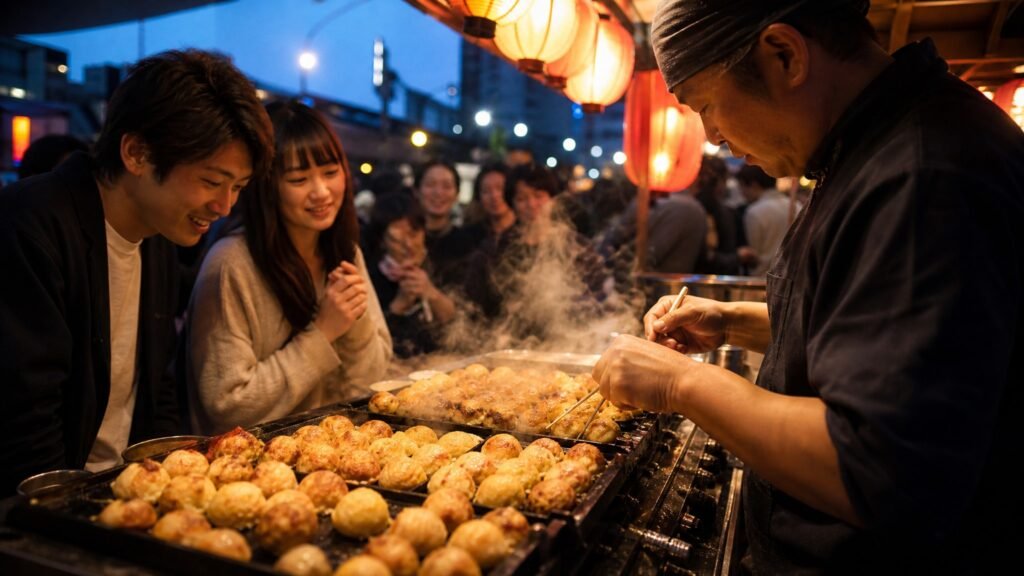
Food and drink: Convenience store onigiri, sandwiches, and canned chu-hi (a light canned cocktail) are the canonical hanami fuel. Seven-Eleven and Lawson near major parks run out of popular items by midmorning, so stock up early or on your way. Hot foods from park stalls, takoyaki, yakitori, taiyaki, are worth the small queue.
Waste disposal: Tokyo parks do not always provide rubbish bins during hanami season. Bring your own rubbish bags and carry your waste out. It’s the norm, not an exception, and locals notice if visitors leave mess behind.
Photographing strangers: Ask before photographing people clearly and up close, especially children. Candid wide-angle shots of the general crowd are fine; pointed cameras at specific individuals without permission are not.
Weather: Spring in Tokyo means occasional cold snaps and sudden showers. A light packable rain jacket and a thermal layer are worth the bag space.
Planning Your Full Cherry Blossom Day in Tokyo: A Simple Itinerary
A full cherry blossom festival japan day in Tokyo can flow beautifully if you sequence it right. Here’s a loose framework that works well for most visitors.
Early morning (7–9 a.m.), Dawn bloom walk: Head to Chidorigafuchi or Ueno Park before the crowds. Walk slowly, take photos in the soft morning light, and enjoy the calm. If you booked a guided tour, this is typically when it begins.
Mid-morning (9–11 a.m.), Coffee and brunch: Neighborhoods like Yanaka, Daikanyama, or Nakameguro have excellent small cafés. Grab a sakura latte or a proper Japanese breakfast set within walking distance of your chosen park.
Afternoon (12–4 p.m.), Cultural experience or food tour: This is the ideal window for a deeper dive, a guided cultural walk, a cooking class, or the best food tours in Tokyo with local guides through a market or covered shotengai. Pairing cherry blossoms with food is very much the local approach to a full spring day.
Evening (5–8 p.m.), Yozakura: Return to Chidorigafuchi or Ueno as the lanterns come on. This is the emotional peak of the day for most visitors, the combination of golden light, falling petals, and the hum of a city sharing something beautiful together is genuinely hard to describe.
Sakura waits for no one’s schedule. Looking ahead to the 2027 season, we’d say the same advice holds: book early, stay flexible, and if you want the easiest route to catching peak bloom without the stress of solo planning, join one of our full-day guided experiences with Washoku Club City, we handle the real-time forecast watching so you just get to enjoy the blossoms.