Kyoto has more temples and torii gates than any single trip can cover, but the city’s real soul lives in its kitchens, market alleys, and centuries-old counters. Book a kyoto food tour with a local guide and you skip the postcard version of the city. You get the one locals actually eat in, where a bowl of tofu comes with a story and every season rewrites the menu. This guide walks through what these tours actually include, how to pick the right format, and why the “why” behind a dish often matters more than the dish itself.
Why Take a Kyoto Food Tour with a Local Guide
A typical Kyoto sightseeing day hits Fushimi Inari, Kiyomizu-dera, and maybe a geisha sighting in Gion at dusk. All worthwhile. None of it explains why Kyoto is considered the birthplace of refined Japanese cuisine. That’s where a food-focused itinerary earns its keep. Instead of checking boxes, you’re following someone who grew up eating this way and can explain what’s on your plate and why it’s there.
Our Kyoto guides are locals who grew up shopping in Nishiki Market and eating at the same family-run counters they now bring guests to, so every stop comes with a personal story, not a script. That’s the difference between a generic tour and a day built around actual relationships with shopkeepers and chefs.
What Makes Authentic Kyoto Food Experiences Different from Generic Tours
Generic tours tend to follow a fixed route with a handful of pre-arranged tastings, often at places that cater specifically to tour groups. Authentic kyoto food experiences work differently. A good guide reads the day, adjusts for what’s actually in season at the market that morning, and takes you to counters where regulars outnumber tourists. We’ve been running food and cultural tours across Japan for more than 12 years, and guests remember the guide’s explanation of “why” a dish exists far more than the dish itself. Why a certain pickle only shows up in autumn. Why Kyoto cooking leans delicate rather than bold. Why a particular shop still makes tofu the same way it did a century ago.
Kaiseki Experience in Kyoto with a Local Guide
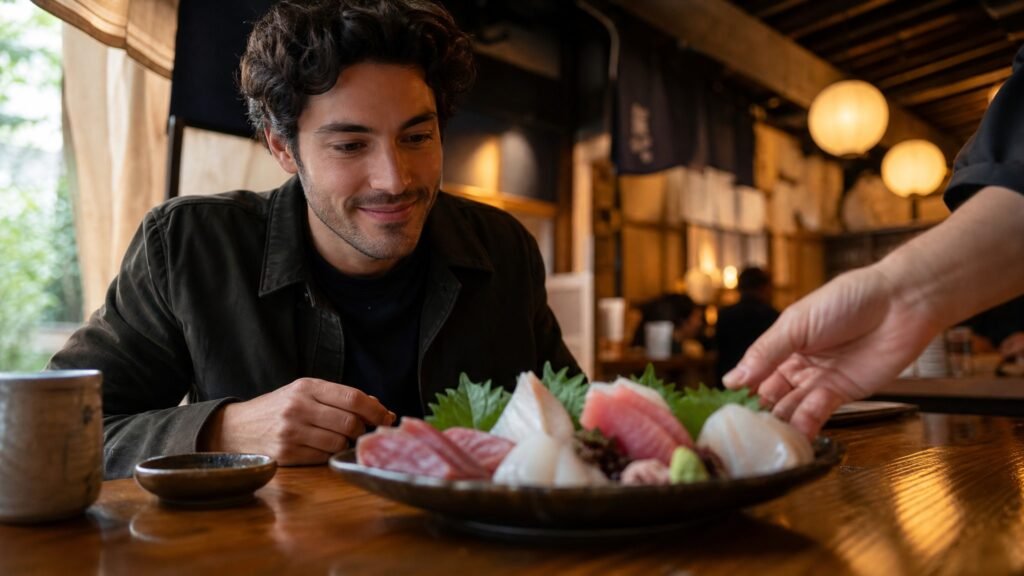
Kaiseki is Kyoto’s signature culinary art form: a multi-course meal built around seasonal ingredients, precise technique, and a deliberate rhythm from light to rich and back again. A kaiseki experience kyoto local guide can arrange gives you access to that tradition without the guesswork of navigating a Japanese-only menu or unfamiliar etiquette.
What to Expect from a Kaiseki Course
A full kaiseki dinner usually moves through eight to ten small courses: an opening appetizer, clear soup, sashimi, a grilled dish, a simmered dish, sometimes a steamed course, rice, pickles, and a light dessert. Kaiseki chefs traditionally build each course around the principle of “shun,” eating an ingredient at its precise seasonal peak, which is why the same menu name can taste completely different in April versus November. A guide who understands this can tell you why that particular fish appeared this week and not last month, turning a beautiful but confusing procession of dishes into something you actually understand.
Choosing Between a Formal Kaiseki Dinner and a Casual Kappo Counter
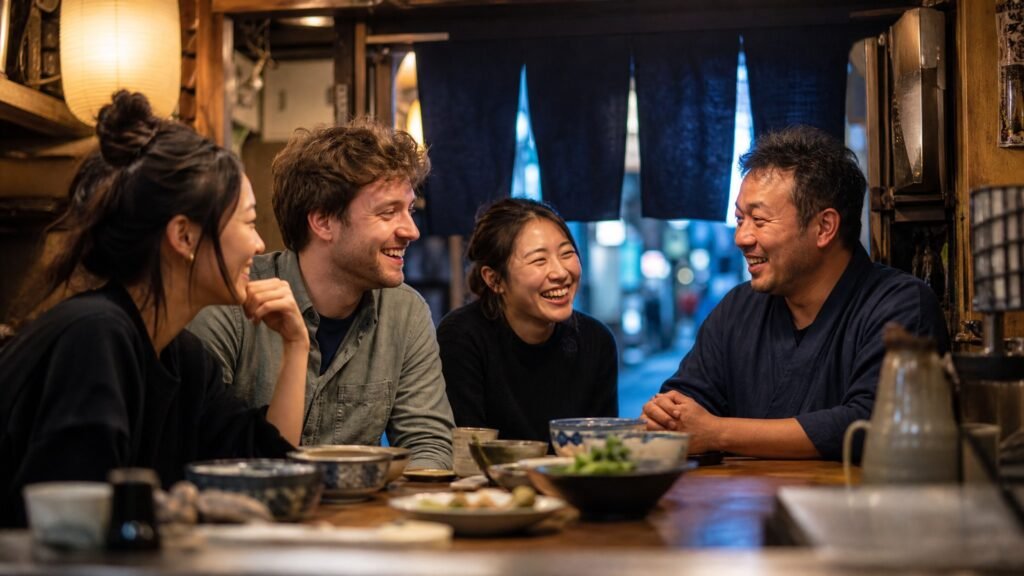
Not every kaiseki experience needs to be a formal, hushed dining room. A kappo counter offers the same seasonal philosophy in a more relaxed setting, with the chef cooking and plating right in front of you. It’s often more affordable and a better fit if you want conversation and a bit of theater with your meal. A local guide can help you weigh budget, formality, and how adventurous you want the menu to be, then match you to the right tier of restaurant rather than the one easiest to book a table at. For readers who want to understand the broader culinary logic behind these choices, it’s worth exploring the full washoku cuisine philosophy that underpins nearly everything on a Kyoto menu.
Kyoto Street Food Tour Guide: Nishiki Market and Beyond
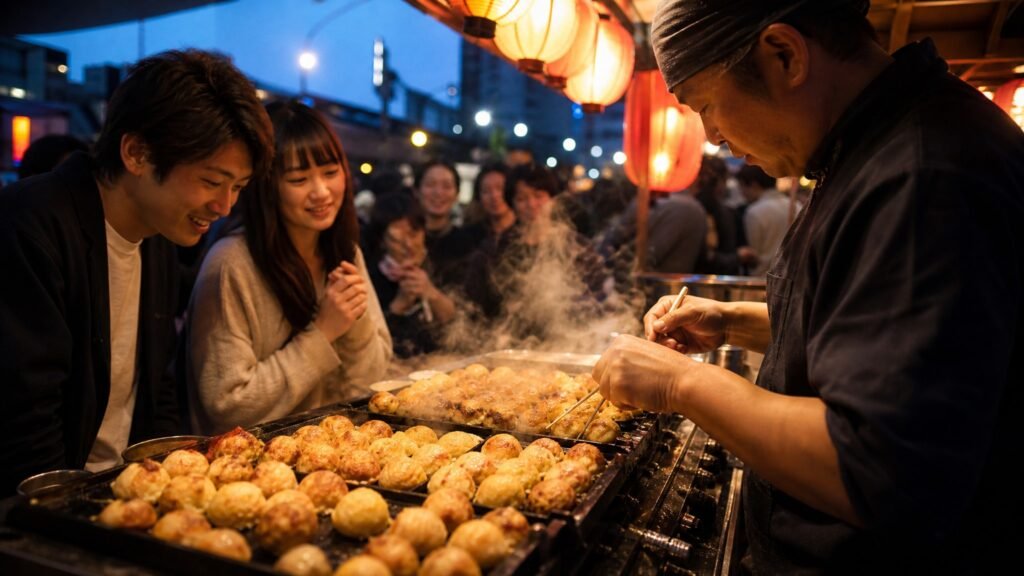
Not every great meal in Kyoto happens sitting down. A kyoto street food tour guide worth their salt will start you at Nishiki Market, the covered arcade that’s supplied Kyoto’s kitchens for generations, then take you well past it.
Nishiki Market’s narrow arcade has been Kyoto’s kitchen for centuries, and a guided walk-through reveals which stalls locals actually queue for versus which are aimed purely at tourist foot traffic. Expect skewered yuba, fresh tofu, pickled vegetables sold by weight, and small grilled seafood stalls tucked between souvenir shops. A guide knows which counter has been run by the same family for three generations and which recently switched to serving pre-made snacks for tour groups. That’s a distinction that’s nearly impossible to spot on your own.
Best Neighborhood Food Walks Outside the Tourist Circuit
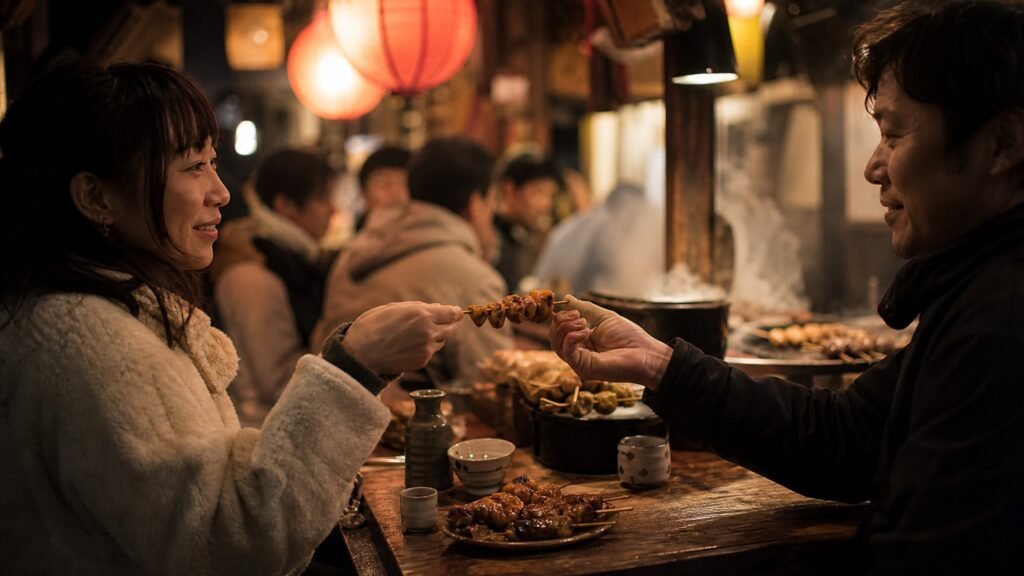
Beyond Nishiki, Pontocho’s narrow riverside alley is worth an evening stroll for its mix of yakitori counters and tiny bars tucked behind sliding doors. But some of the best kyoto neighborhood food walks happen in ordinary residential shopping streets, the kind with a decades-old bakery, a soba shop with no English menu, and a produce stand run by someone’s grandmother. These streets rarely appear in guidebooks. That’s exactly why kyoto local food recommendations from someone who actually lives there matter so much. A guide can string together a walk that mixes a famous market with these quieter corners, giving you both the highlight reel and the neighborhood texture most visitors never see.
Kyoto Gion District Food Tour: Eating Where Geisha Culture Lives
Gion is famous for geisha sightings and lantern-lit streets, but it’s also one of the densest concentrations of serious restaurants in the city. A kyoto gion district food tour treats the area as a food destination first, not just a photo backdrop.
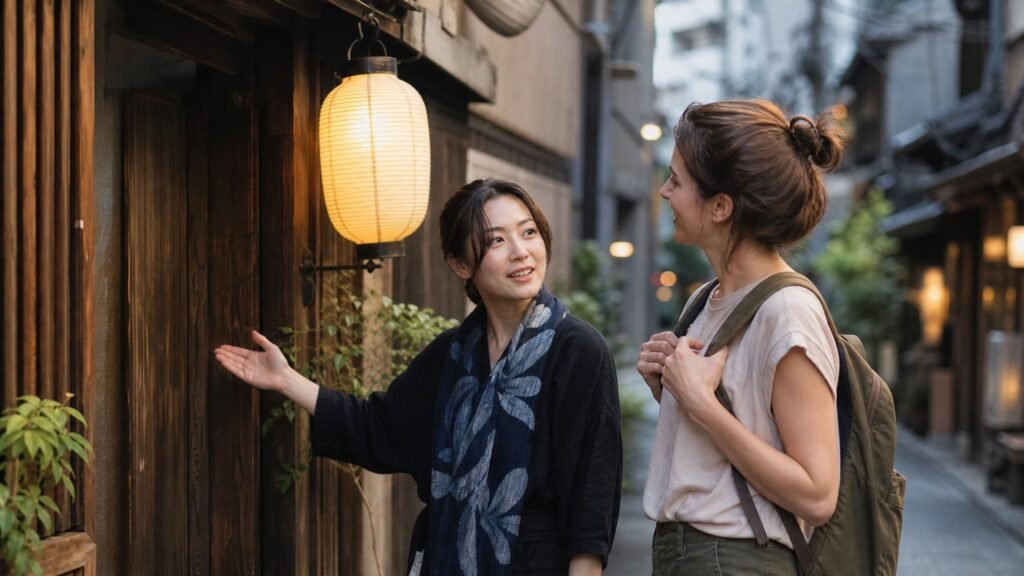
The challenge is that many of Gion’s best restaurants operate on a reservation-only, introduction-based system: unmarked wooden doorways with no sign, no posted menu, and sometimes no English spoken. Locals recognize a certain type of curtain, a certain style of doorway, as a signal that a serious kitchen is behind it. Visitors walk past these places daily without knowing they exist. A guide who has relationships in the district can get you through doors that would otherwise stay closed, and can explain the etiquette once you’re inside, from where to sit to how loudly (or quietly) to speak.
A typical evening kaiseki walk in Gion pairs a seasonal multi-course meal with a stop at a decades-old tofu shop and a nightcap at a standing sake bar, letting guests see how one neighborhood expresses the same seasonal ingredients three different ways. That range, refined, humble, and social, is what makes Gion worth a food-focused visit rather than just a quick evening photo walk.
Kyoto Tea Ceremony and Food Tour: Pairing Ritual with Cuisine
Tea and food are deeply intertwined in Kyoto’s culture, and a kyoto tea ceremony and food tour lets you experience both in the same day. A traditional tea ceremony is built around precise, quiet ritual: the whisking of matcha, the presentation of the bowl, the deliberate pace of each gesture. Paired with it is usually a small wagashi sweet, designed specifically to balance the bitterness of the matcha and often shaped to reflect the current season, whether that’s a cherry blossom motif in spring or a maple leaf in autumn.
How Sake Tasting and Food Pairing Fits into a Kyoto Food Tour
Where tea ceremony offers a quiet, meditative note, a kyoto sake tasting food pairing experience is its livelier evening counterpart. Kyoto sits near Fushimi, one of Japan’s most historic sake-brewing districts, so pairing several small dishes with different sake styles is a natural extension of an afternoon spent on tea and sweets. A good guide will walk you through how a drier, more mineral sake suits grilled or fried dishes, while a fuller, fruitier style pairs better with something rich or fermented. Both the tea ceremony and sake portions can be adapted for plant-based travelers, since wagashi is traditionally vegan and most sake pairing menus can swap in vegetable or tofu-based dishes without losing the experience’s structure.
Small Group vs Private Kyoto Food Tours: Which Fits Your Trip
Once you’ve decided on the type of food experience you want, the next choice is format. Small-group tours are typically more affordable and social, a good option if you enjoy meeting other travelers and don’t mind a fixed itinerary with a handful of set stops.
Private tours cost more but offer real flexibility. You can slow down at a stop you love, skip something that doesn’t interest you, or ask your guide to build the day around a specific goal, like a deep dive into kaiseki or an evening focused entirely on Gion’s back streets. If you’re traveling with dietary restrictions, a specific culinary interest, or simply want the day paced to your family or group, a fully private guided day tour in Kyoto tends to be the better investment. It also gives your guide room to adjust on the fly if a market stall sells out or a restaurant has a same-day cancellation worth grabbing.
Seasonal and Vegetarian Options to Ask Your Guide About
Kyoto’s food culture is unusually accommodating to vegetarian and vegan travelers, largely thanks to shojin ryori, the plant-based cuisine developed in Buddhist temples using tofu, seasonal vegetables, and skillfully prepared yuba. Ask your guide in advance about dietary needs, and they can steer the day toward restaurants and market stalls that fit, including some of Kyoto’s best vegetarian restaurants, without you losing any of the seasonal storytelling that makes these tours worthwhile. It’s also worth asking what’s in season during your specific travel dates, since a guide can rebuild parts of the itinerary around whatever ingredient is at its peak that week.
If your Japan itinerary stretches beyond Kyoto, it’s worth comparing notes with how Osaka’s street food scene compares, or looking into a similar local-guided food tour in Osaka for the days you spend there. First-time visitors nervous about ordering at a counter might also want a quick refresher on izakaya ordering etiquette before their trip, and if Tokyo is part of the plan, our Tokyo food tour guide covers that city’s very different food culture.
Whichever format you choose, the goal is the same: understanding Kyoto through its food, guided by someone who’s spent a lifetime eating it. Washoku Club City builds these itineraries around real relationships with local shops, chefs, and market vendors, the kind of access that turns a meal into a story worth remembering long after the trip ends. If that sounds like the Kyoto you want to experience, reach out and let us build a food-focused day around what genuinely interests you.