A Nara day trip from Osaka or Kyoto is one of the most rewarding things you can do in the Kansai region, and one of the most underestimated. In a single day you can stand before a colossal Buddha, feed bowing deer, eat sushi wrapped in a persimmon leaf, and wander a preserved merchant quarter that most visitors never find. Most people rush through Todai-ji by noon and catch the next train back. This guide shows you exactly what they miss, and how to have a much better day.
Why Nara Deserves a Full Day on Your Japan Itinerary
Nara was Japan’s first permanent capital, and its UNESCO-listed monuments sit in a park still roamed freely by over a thousand sika deer. That combination of living history and living wildlife is genuinely rare. The city is compact enough to cover its highlights on foot, yet layered enough to reward anyone who stays past the crowds. Give it a full day and it gives back something far richer than a quick temple tick-box.
Getting to Nara: Trains from Osaka and Kyoto
The logistics are simpler than most guides suggest. Trains run frequently from both cities, so you don’t need to plan around a rigid departure, just show up and go.
Nara from Osaka (Kintetsu vs JR Yamato-ji Line)
From Osaka, you have two solid options:
- Kintetsu Nara Line from Osaka-Namba or Osaka-Uehonmachi: roughly 40–42 minutes on the Limited Express, or around 50 minutes on an Express. The Kintetsu terminus drops you right at Kintetsu Nara Station, a short walk from the park. Kintetsu trains are not covered by the JR Pass, so pay with an IC card (Suica, ICOCA) or buy a Kintetsu 1-day/2-day pass if you’re combining Nara with Yoshino or Ise.
- JR Yamato-ji Line from Osaka (JR Namba) or Tennoji: roughly 50–60 minutes to JR Nara Station, which is a 20-minute walk or short bus ride from the main sights. This option is covered by the JR Pass, making it cost-free if you already hold one.
Verdict: If you have a JR Pass, take JR. If not, Kintetsu is faster and drops you closer.
Nara from Kyoto (Kintetsu Limited Express vs JR Nara Line)
From Kyoto, the Kintetsu Limited Express from Kintetsu Kyoto Station (inside Kyoto Station building) reaches Kintetsu Nara Station in roughly 35 minutes, one of the fastest ancient-capital day trips in Japan, and realistic even for a half-day excursion. A reserved-seat supplement applies; IC cards cover the base fare.
The JR Nara Line from Kyoto Station is slower (around 45–50 minutes on a Miyakoji Rapid) but fully covered by the JR Pass. Trains run frequently throughout the day, so the gap in journey time rarely matters in practice.
For a Nara from Kyoto day trip, the Kintetsu option is the default for non-JR-Pass holders. JR Pass holders lose virtually nothing by taking JR, just budget a few extra minutes.
Your Nara Day Trip Itinerary: Morning to Evening
This itinerary assumes a 9 am arrival at Kintetsu Nara Station, which is easy from both Osaka and Kyoto without an early start.
Morning: Nara Deer Park and Todai-ji Temple
9:00 am, 10:30 am
Head straight to Nara Deer Park. The deer are most active in the morning, and the light is best then too. Buy shika senbei (deer crackers) from one of the licensed vendors near the park entrance (¥200 per bundle) and enjoy a few minutes of the surreal experience of having deer bow at you in anticipation. More on safe feeding below.
From the park, walk north toward Todai-ji. The Nandaimon Great South Gate, flanked by two fierce wooden guardian statues, is worth pausing at before you reach the main hall. Inside, the Daibutsuden houses the Great Buddha: a 15-metre bronze Vairocana that has dominated this hall since the 8th century. The Great Buddha Hall is recognised as one of the largest wooden structures in the world, and the current Edo-period hall is actually smaller than the original, a detail that makes the original scale almost incomprehensible.
Entry to the Daibutsuden costs ¥600. Arrive before 10 am to beat the tour groups, which tend to arrive mid-morning.
Midday: Kasuga Taisha and the Quiet Trail to Nigatsu-do
10:30 am, 12:30 pm
From Todai-ji, follow the forested path east toward Kasuga Taisha, Nara’s most important Shinto shrine. The approach is lined with hundreds of stone and bronze lanterns, lit twice a year during the Mantoro festivals, though beautiful even unlit. Entry to the outer precinct is free; the inner sanctuary charges a small fee.
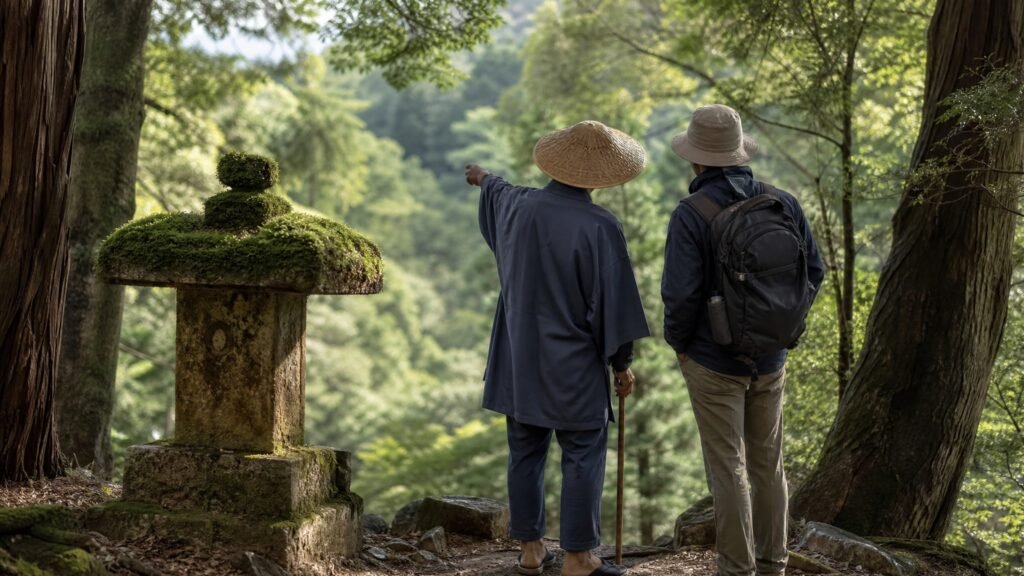
Here’s the detour most visitors skip: after Kasuga Taisha, double back northwest along the wooded trail toward Nigatsu-do, a secondary hall of Todai-ji perched on the hillside above the main complex. We’ve been leading private day trips to Nara for over 12 years, and the question we hear most at Kintetsu Nara Station is: “Why didn’t anyone tell me about the trail to Nigatsu-do?” That forested path, just a 15-minute walk past Kasuga Taisha, delivers panoramic views over the basin with almost none of the main-gate crowds. The veranda at Nigatsu-do is one of the quietest, most beautiful spots in Nara.
Grab lunch near Kasuga Taisha or head back toward the station area (see the food section below).
Afternoon: Naramachi District and Lesser-Known Temples
1:30 pm, 4:30 pm
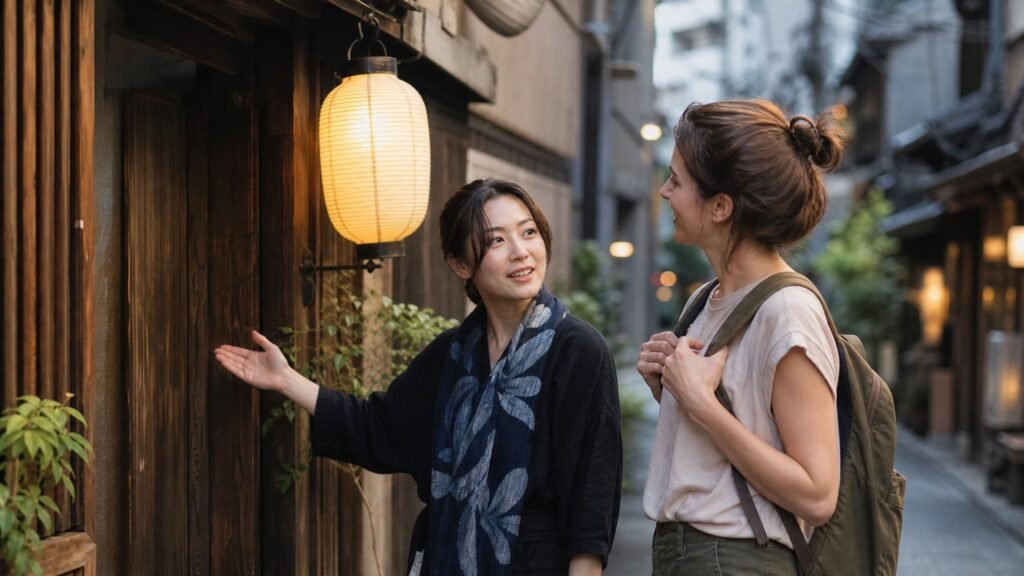
South of Kofuku-ji lies Naramachi, Nara’s preserved merchant quarter. The narrow lanes are lined with machiya townhouses, small galleries, and independent cafés. It feels genuinely lived-in rather than curated for tourists. Pick up a piece of local craft, browse a townhouse museum, or simply slow down in a coffee shop with hand-ground matcha.
From Naramachi, it’s a short walk to Gangoji, a World Heritage temple that sees a fraction of Todai-ji’s visitors, with a mossy courtyard and a small museum of ancient roof tiles. The pace here is entirely different: calm, contemplative, and well worth 30 minutes.
Aim to leave the main sights by 4:30–5:00 pm. Sunset at Nara Deer Park, when the deer gather near the pond, is a fine final image before heading to the station.
Deer Interaction Safety: How to Enjoy Nara’s Residents Responsibly
The deer are the undisputed stars of any Nara day trip, but a little awareness makes the experience better for everyone, including the deer.
- Buy shika senbei only from licensed vendors (yellow carts near park entrances). Unlicensed snacks can harm the deer.
- The bow is real: deer have learned to dip their heads to prompt visitors to hand over crackers. Bow back, it’s charming and it works.
- Conceal food when you’re done. The deer’s sense of smell is sharp. A bag of crackers in a tote is enough to attract a persistent and surprisingly forceful nudge. Tuck everything away before moving on.
- Watch children closely. Deer are gentle but large, and a child at eye level with an eager sika can be startled. Keep small children close and hand crackers to them only when you’re supervising directly.
- Seasonal note: During the autumn rut (typically October–November), male deer can be more assertive. Rangers are on hand in the park; the advice is simple: give antlered males a little more space.
Go in relaxed, follow the cues, and the deer will do the rest.
Nara Local Food: What to Eat on Your Day Trip
Nara has a distinct food identity that most day-trippers walk right past. Here’s what to seek out.
Kakinoha-zushi: Nara’s Iconic Pressed Sushi
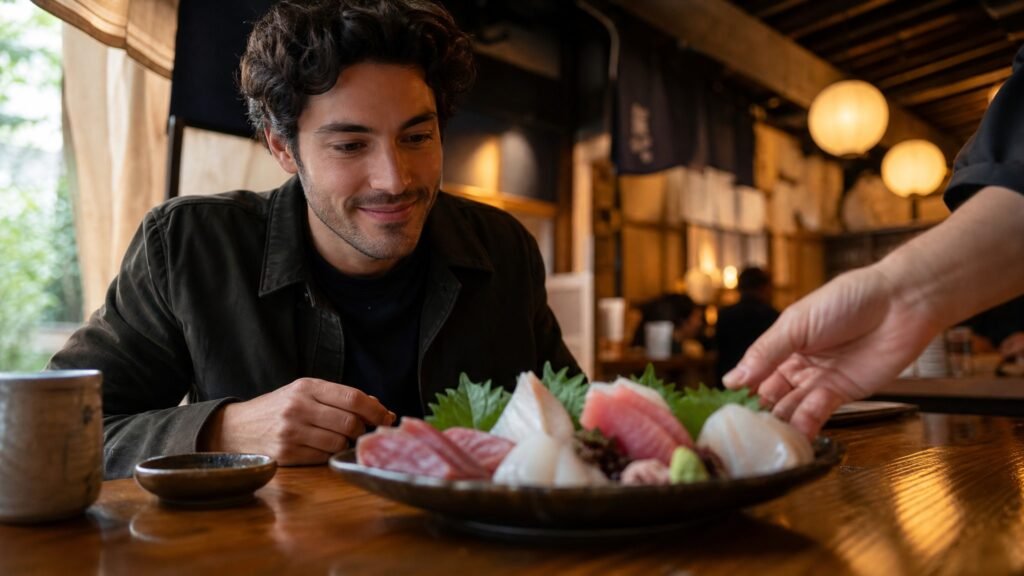
Kakinoha-zushi is one of Japan’s most distinctive regional foods: mackerel or salmon pressed onto a bed of vinegared rice and wrapped in a persimmon leaf. The technique was developed to preserve fish in landlocked Nara before refrigeration existed, the persimmon leaf has natural antimicrobial properties and imparts a subtle, earthy fragrance to the rice. Established shops near Kintetsu Nara Station, some operating for generations, sell it in traditional wooden box sets. Look for Hiraso or Tanaka near the station precinct; a box of 10 pieces runs around ¥1,500–¥2,000.
It’s the Nara food to prioritise. Nothing else says “you actually ate in Nara” quite like this.
More Nara Flavours: Miwa Somen and Yoshino Kuzu Sweets
Miwa somen are fine wheat noodles produced in the Miwa area south of Nara City, among the oldest somen in Japan by tradition. You’ll find them served hot in broth or cold with dipping sauce at casual restaurants throughout the city, light, elegant, and perfect between sightseeing stops.
Yoshino kuzu sweets (wagashi made from arrowroot starch grown in the Yoshino mountains) appear as kuzumochi, kuzukiri, and warm kuzu drinks at tea shops in Naramachi. They’re subtle and satisfying, a good reason to duck into a teahouse in the afternoon.
For a deeper look at traditional Japanese cuisine, our Washoku guide covers the regional food culture behind dishes like these.
Hidden Temples Away from the Crowds
The main Nara circuit, Todai-ji, Kasuga Taisha, Kofuku-ji, is genuinely great. But Nara’s outlying temples reward anyone willing to walk 15–20 minutes further.
Shin-Yakushi-ji, tucked into a quiet residential neighbourhood east of the deer park, is one of the least-visited major temples in Nara. Its clay guardian statues (juni shinsho) are remarkably well-preserved from the 8th century, twelve fierce figures ringing the central Yakushi Nyorai in an intimate hall that feels more like a discovery than a destination. Admission is small; crowds are almost nonexistent.
Byakugoji sits on a hillside south-east of the main sights, surrounded by a compact garden with views toward the Yamato plain. It’s a temple for sitting and thinking rather than ticking a box.
Within the main Kofuku-ji complex itself, the sub-temples and the recently restored five-storey pagoda repay a slower look than most visitors give them. The Tokondo (East Golden Hall) holds a remarkable collection of Nara-period Buddhist sculpture that puts the main circuit in sharper historical context.
None of these spots require special planning, just factor in the walking time and let the crowds thin naturally as you move away from the main gate.
Book a Private Nara Day Trip with a Local Guide
A well-planned Nara day trip from Osaka or Kyoto is very manageable on your own, and we hope this guide proves that. But if you want someone to handle the trains, curate the tastings, and know instinctively when to duck off the main path, that’s exactly what we do.
We’ve been running private guided day tours to Nara for over 12 years, in small groups, fully customised to your interests. Whether you want to go deep on Buddhist sculpture, spend an extra hour in Naramachi, or add a kakinoha-zushi tasting to the morning, we build it around you. We handle the logistics; you show up curious.
Join us on a private Kyoto day tour and let’s make your Nara day the highlight of your Japan trip.