Osaka has a saying, kuidaore, which translates loosely as “eat until you drop.” It’s not a cute phrase on a souvenir tote bag. It’s a genuine cultural philosophy that shapes the city’s entire relationship with food: the density of restaurants per block, the pride vendors take in their craft, the way locals treat a good meal as a destination in itself. If you’re planning a visit and you want to eat like a real Osakan, this osaka street food tour guide will take you well past the glowing canal and into the neighbourhoods where the real eating happens.
We believe Osaka is Japan’s most exciting city for curious eaters, and we’ve spent over 12 years proving it on the ground. Here’s how to make the most of every bite.
Why Osaka Is Japan’s Undisputed Street Food Capital
Osaka’s food culture is older and more deeply rooted than any single tourist attraction. Long before Dotonbori became a backdrop for selfies, the city was already the commercial and culinary heart of Japan, a merchant town where good food was currency and feeding people well was a point of civic pride.
That kuidaore spirit shapes everything. Portion sizes are generous. Stall owners argue passionately about batter consistency. Even convenience stores here punch above their weight. Osaka ranks among the top food-tourism destinations in Asia, and locals will tell you that reputation is earned daily, not inherited.
The city’s street food goes far deeper than the famous neon-lit canal strip. Markets that have fed professional chefs for over a century still operate every morning. Retro working-class neighbourhoods serve dishes that predate the tourist boom by decades. This guide is for curious eaters who want all of it, not just the checklist stops.
Dotonbori Street Food: What’s Actually Worth the Line
Let’s be honest: Dotonbori is crowded, loud, and at peak hours almost overwhelming. That doesn’t mean you should skip it. The osaka dotonbori food scene is iconic for real reasons, but knowing what to prioritise saves you time and saves your appetite for what matters.
Arrive before 11 am or after 9 pm. These are the golden windows. Midday and early evening bring the thickest crowds and the longest queues. An early morning walk along the canal is genuinely atmospheric, and late-night Dotonbori has a buzzy, after-show energy that’s worth experiencing once.
The key to separating worth-it stalls from tourist traps is watching the cook. If the food comes out of a warming tray rather than being made to order in front of you, move on.
Takoyaki Osaka Street Food: Choosing the Right Stall
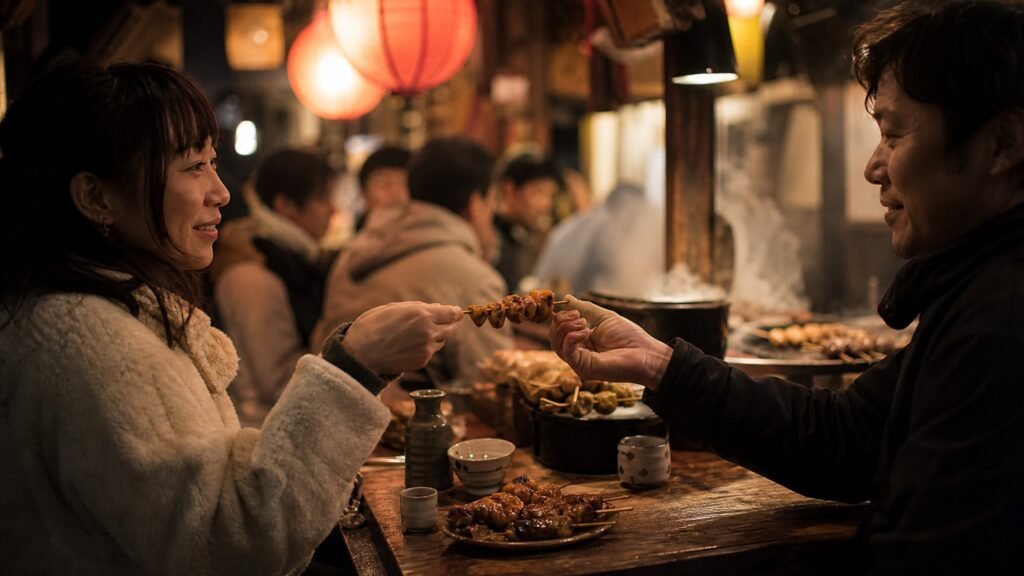
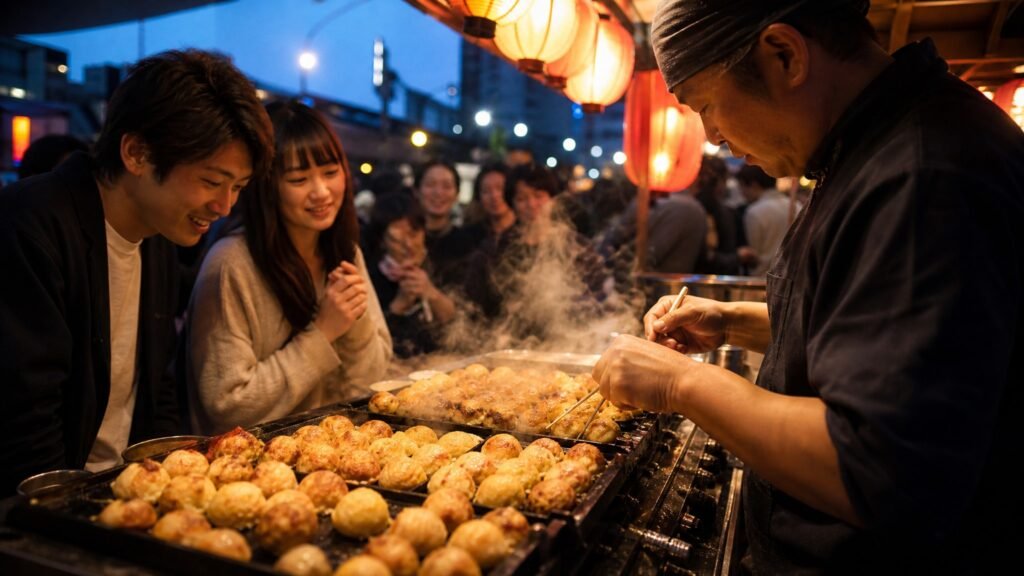
Takoyaki, the famous octopus-filled balls of griddled batter, are the signature osaka street food, and Dotonbori has more stalls selling them than you can count. The difference between a great one and a mediocre one is entirely in the technique.
Local vendors will tell you the same thing: look for a cook who rotates every ball by hand with a single skewer. It’s a skill that takes real practice. That quick, confident rotation creates the thin, slightly crisp shell with a molten interior, the texture that defines a genuinely crafted takoyaki. A stall running on volume alone will cut corners on rotation time, and you’ll taste the difference.
The big-name chains with the loudest signage are not always the best choice. Smaller counter stalls where you can watch the cook work and pick up your order directly are often more satisfying, and the queue, if there is one, moves faster.
Okonomiyaki Osaka: Sit-Down vs. Street Style
Osaka-style okonomiyaki is different from versions you’ll find elsewhere in Japan. In Hiroshima, the ingredients are layered. In Osaka, everything is mixed into the batter together, a thicker, chunkier pancake with cabbage, pork, and seafood folded right in before cooking.
On the street, you’ll find grab-and-go slices. They’re fine. But the real experience is a counter-seat restaurant where the chef cooks directly in front of you on a teppan griddle. Watching the batter spread, the edges crisp, and the final drizzle of Worcestershire-based sauce and kewpie mayo apply in long, deliberate lines, that’s part of the meal. If you’re going to eat okonomiyaki in Osaka, make time to sit down.
Kuromon Ichiba: Osaka’s Kitchen Market
If Dotonbori is Osaka’s stage, Kuromon Ichiba is its engine room. This 580-metre covered arcade market has supplied the city’s professional chefs and home cooks for well over a century. It doesn’t perform for visitors, it simply works.
Go in the morning. Before tour buses arrive, the market belongs almost entirely to local shopkeepers and restaurant buyers. You’ll see fishmongers receiving deliveries, produce vendors arranging seasonal fruit, and knife sellers sharpening blades for the day’s first customers. It’s a living, working market, and that energy is most visible before the crowds shift the balance.
As part of any solid osaka food market tour, Kuromon is essential, and it offers a completely different experience from Dotonbori.
Best Bites to Eat as You Walk Through
Kuromon is an eat-as-you-go market. Most vendors hand you a small plate or a skewer right at the counter. Here’s what to prioritise:
- Grilled scallops, cooked live on the half-shell with a soy and butter glaze, usually sold per piece. Rich, sweet, and gone in two bites.
- Fresh-cut fruit, seasonal and hyperlocal. In summer, look for cold mango or white peach. In winter, mikan citrus is exceptional.
- Wagyu skewers, a handful of stalls offer grilled beef on a stick. It’s a splurge, but a reasonable one for a market-fresh bite.
- Tamagoyaki, thick, slightly sweet rolled omelette. Simple and comforting, and a useful palate reset between richer bites.
Pace yourself. The market rewards slow walking and small portions over a single big stop.
Shinsekai: The Neighbourhood Most Tours Skip
Most osaka street food tours don’t make it to Shinsekai, which is exactly why we always go. Built in 1912 to evoke the energy of Paris and New York, the district still carries its original retro working-class identity. The neon signs are older and less polished than Dotonbori’s. The restaurants are smaller. The regulars are, in many cases, the same regulars who have been coming for thirty years.
Kushikatsu, deep-fried skewers of meat, seafood, and vegetables coated in a light, crunchy breadcrumb batter, is the dish Shinsekai is built around. Many of the restaurants here are run by families who have been frying the same skewers for three or four generations. The recipes haven’t changed because they don’t need to.
Kushikatsu Culture and the No-Double-Dipping Rule
Every kushikatsu restaurant in Shinsekai has a communal pot of tangy brown dipping sauce on the table. The rule is simple and absolute: no double-dipping. You dip your skewer once. You do not put a half-eaten skewer back in the sauce.
This is not a gimmick invented for tourists. It’s a genuine cultural norm, rooted in the communal nature of the dining style. The sauce pot is shared by everyone at the table (and often replenished by the whole restaurant). Respecting it signals that you understand you’re a guest in someone’s tradition, not just passing through for a photo.
If you forget, the staff will remind you, kindly, but firmly. Don’t take it personally. Just don’t double-dip.
Navigating Language Barriers on an Osaka Food Tour
Here’s the reassuring truth: Osaka’s street food scene is surprisingly navigable even without a word of Japanese.
Most stalls and market vendors use plastic food displays, hyper-realistic models of every dish, often with prices. Point at what you want. It works every time. Many sit-down restaurants also use picture menus, where you circle your order or tap a touchscreen.
For anything more complex, a menu written entirely in kanji, or a market vendor describing the day’s catch, Google Lens is your best tool. Open your camera, hover over the text, and get an instant translation. It’s not always perfect, but it gets you to 90% of what you need.
That said, there’s a real difference between navigating on your own and genuinely understanding what you’re eating. A knowledgeable local guide doesn’t just translate, they explain why a particular vendor’s miso-marinated fish is worth the line, or how to tell fresh octopus from frozen by the colour of the tentacles. That context turns a good meal into a memorable one.
If you’re combining cities, our Tokyo food tour with local guides follows the same approach, local knowledge first, tourist assumptions second. And if your itinerary includes a day trip south, we also cover vegetarian-friendly dining in nearby Kyoto for travellers who need plant-based options without the guesswork.
How to Book an Osaka Street Food Tour Guide With Local Experts
A well-designed full-day osaka street food tour covers more than one neighbourhood. It moves between Kuromon Ichiba in the morning (produce, seafood, the working market atmosphere), into Shinsekai for kushikatsu and retro local culture, and through Dotonbori with enough context to skip the tourist traps and hit the genuinely great stalls. You eat frequently, in small portions, the way Osakas actually do.
Going solo is absolutely possible, and this guide gives you a solid foundation. But a guided tour removes friction at every step: no wondering if you’re in the right line, no guessing whether the menu item is what you think it is, no missing the family-run counter tucked behind a vending machine that you’d walk past a hundred times without noticing.
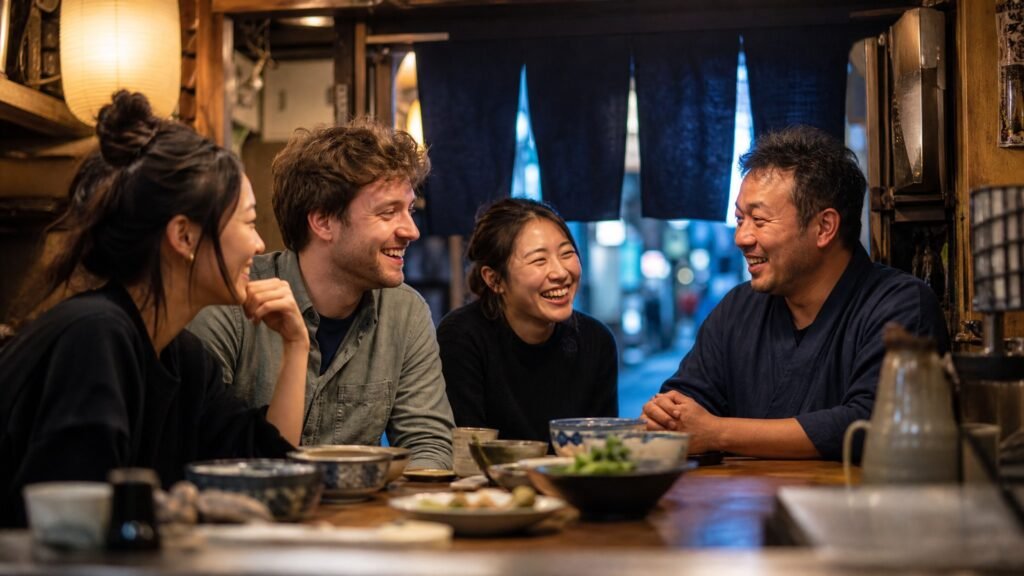
With over 12 years running food tours across Japan, our Washoku Club City guides have walked every covered arcade and side alley in Osaka’s food districts. We know which stalls changed hands, which recipes stayed the same, and exactly where locals eat on their lunch breaks. Our tours run in small groups, because the best street food conversations happen around a small table, not a crowd.
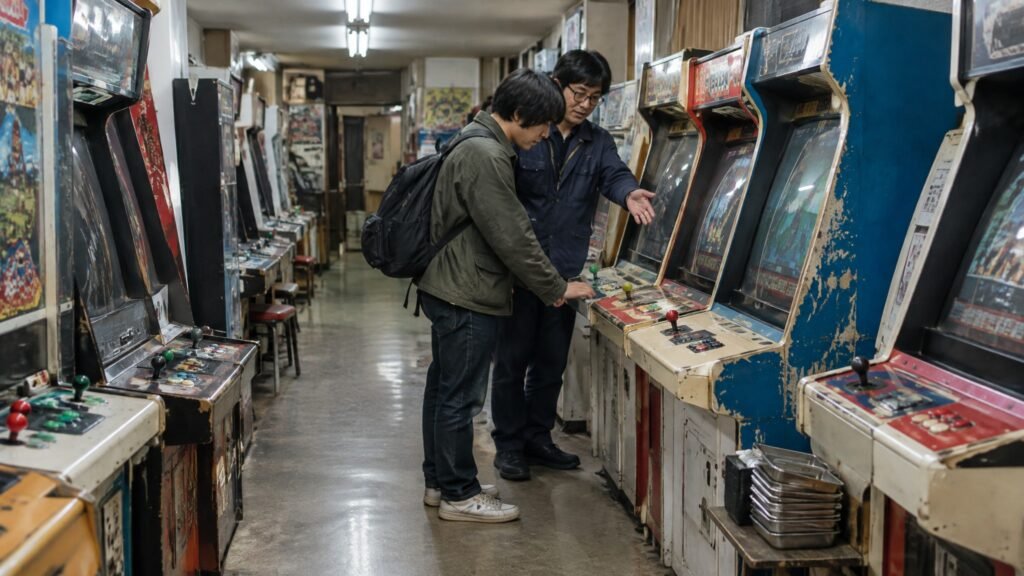
Whether you’re a first-time visitor or returning to go deeper than your last trip, we’d love to show you the Osaka that locals actually eat in. For fellow food lovers who also have a passion for Japanese pop culture, we’ve put together a guide to anime pilgrimage spots across Japan, because Osaka’s Den Den Town neighbourhood sits right in the middle of some of the best eating streets in the city.
Ready to eat until you drop? Browse our Osaka street food tour options and book your spot with a local guide who genuinely loves this city’s food.