Most people picture Tokyo as neon lights, bullet trains, and the world’s busiest crossing, not as the gateway to serious mountain terrain. But a hiking near Tokyo day trip is genuinely one of the best things an international visitor can do, because ancient forests, ridge trails, and pilgrimage paths start where the subway ends. This guide is built for tourists, not locals. We cover honest difficulty ratings, actual train lines, seasonal hazards, and when it’s worth having a local guide by your side.
Why Tokyo Is a Hiker’s Secret Weapon
Tokyo sits at the edge of the Kantō Mountains to the west and the Bōsō and Miura peninsulas to the south and east. Within 90 minutes of Shinjuku station, you can be standing in old-growth cedar forest, walking a Shinto pilgrimage route, or climbing toward views of Mt. Fuji. Most visitors never discover this because the city’s scale overwhelms first impressions.
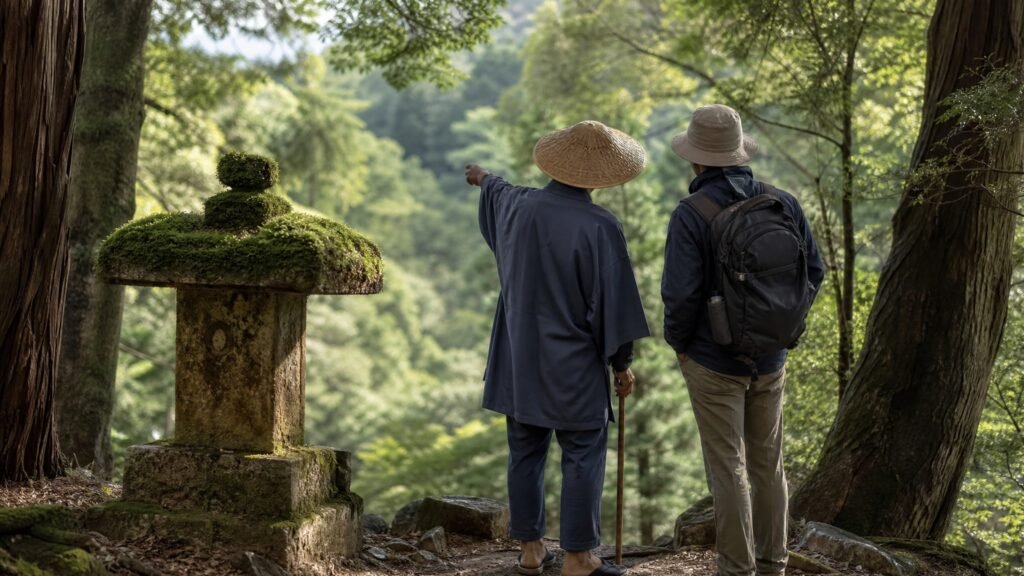
We believe that’s a missed opportunity. The trails here aren’t just a break from urban life, they run through shrine gates, moss-covered stone lanterns, and river gorges that feel a world away from the Yamanote Line. And because Japan’s rail network is so efficient, you don’t need a hire car, a tour bus, or a complicated plan to reach any of them.
The Best Hiking Near Tokyo: 5 Day Trips Ranked by Difficulty
Mt. Takao (Takaosanguchi), Beginner-Friendly & Year-Round
Difficulty: Beginner (tourist-calibrated) | Round-trip walking time: 2–3 hours on the main trail | Elevation gain: ~400 m on a gentle, paved and well-signposted path
Mt. Takao is under an hour from Shinjuku on the Keio Line, making it one of the most visited mountains in the world by annual footfall, a fact that surprises most first-time visitors who expect a remote wilderness feel. Trail 1, the main route, is wide and surfaced for most of its length. There’s a cable car if you want to skip the lower section.
Honest watch-out: Weekends in autumn (October–November) and during cherry blossom season draw enormous crowds. Trail 1 can feel more like a queue than a hike. Go early, or pick a weekday.
Footwear: Trainers are fine. You don’t need hiking boots on Trail 1.
Okumusashi & Mitake Gorge, Easy to Moderate, Uncrowded
Difficulty: Easy to moderate | Round-trip walking time: 3–4 hours depending on gorge extension | Elevation gain: ~250–400 m, mostly gentle riverside paths with some rocky sections near the gorge
Mt. Mitake (Mitakesan) and the Tama River gorge below it sit about 90 minutes west of Shinjuku on the JR Chuo Line to Ōme, then a short Ōme Line connection to Mitake. The train passes through increasingly green scenery, a pleasant contrast with central Tokyo. From Mitake station, a bus takes you to the cable car base.
This area is designated as a therapeutic forest for shinrin-yoku, the Japanese practice of mindfully walking through woodland, adopted by the Forestry Agency as an official wellness program. Mitake Gorge is one of the most actively promoted shinrin-yoku routes in the Kantō region.
Honest watch-out: The gorge path has uneven rocks. Sturdy trainers or light hiking shoes are worth it here. Cell signal is patchy.
Nikko Day Hike, Moderate, Temples & Waterfalls
Difficulty: Moderate | Round-trip walking time: 4–5 hours including sightseeing stops | Elevation gain: ~500–600 m with some steeper switchbacks near Chūzenji Lake
Nikko combines one of Japan’s most ornate shrine complexes (Tōshō-gū) with legitimate mountain hiking, up to Chūzenji Lake and Kegon Falls, and beyond into the Nantai volcanic landscape. On our guided day trips from Tokyo, we consistently find that international visitors underestimate the elevation gain on the Nikko trails. It’s not that the terrain is extreme; it’s that jet lag, humidity, and unfamiliar trail markers combine in ways a local guide can help you navigate.
The trail markers switch between kanji and romanized text inconsistently. If you don’t read Japanese, the junction signs near the upper plateau are genuinely confusing.
Honest watch-out: Wear proper hiking shoes. The paths above the falls involve loose stone and tree roots. Budget more time than you think you need, the shrines pull you in. Nikko also overlaps with anime pilgrimage trails around Japan for fans of certain series set in the region.
Mt. Fuji from Tokyo, Advanced, Strictly Seasonal
Difficulty: Advanced (for all tourists regardless of home fitness) | Round-trip walking time: 7–10 hours from 5th Station | Elevation gain: ~1,400 m from the Yoshida 5th Station, steep, relentless, high-altitude switchbacks with chains near the summit crater
Fuji hiking from Tokyo is the bucket-list option, but it demands respect. Mt. Fuji’s official climbing season runs from early July to mid-September each year; outside this window, huts are closed, trails are unpatrolled, and sudden snowfall makes the upper routes genuinely dangerous for unprepared visitors. Within the season, take the Chuo Line from Shinjuku to Ōtsuki, then the Fujikyu Railway to Fuji-Q Highland or Kawaguchiko, then a seasonal bus to the 5th Station, roughly 2.5 hours total.
Altitude sickness is a real risk above 3,000 m for visitors arriving from sea level and climbing the same day. The mountain is not just a steep walk, it’s an endurance test.
Honest watch-out: The JR Pass does not cover the Fujikyu Railway section. Bring a headlamp for summit night climbs, layers for sub-zero summit temps even in August, and trekking poles. This is the one Tokyo hiking trail where under-preparation causes real incidents every season.
Kamakura Hills & Daibutsu Trail, Beginner, Culture-Heavy
Difficulty: Beginner | Round-trip walking time: 2–3 hours | Elevation gain: ~150–200 m across wooded ridgelines, gentle, well-maintained paths
The Daibutsu Hiking Trail in Kamakura links wooded ridgelines with sudden views of the Great Buddha and Engaku-ji temple complex, a roughly 2-hour loop that layers nature and Zen history in a way few other trails near Tokyo can match. You reach Kamakura from Tokyo Station or Shinjuku via the JR Yokosuka or Shōnan-Shinjuku Line in about 50–60 minutes.
The trail passes through quiet bamboo groves and emerges at major cultural sites. It’s ideal for visitors who want a taste of hiking without committing to a full mountain day. Temple food culture on the trail, particularly shojin ryori, the Buddhist vegetarian cuisine served near Zen temples, is part of what makes the Kamakura experience worth lingering over.
Honest watch-out: The trail is narrower than Takao and gets slippery after rain. Trainers with some grip are fine; flip-flops are not.
Getting There: Train Logistics from Central Tokyo
The single biggest gap in most hiking guides is the train detail. Here’s the direct version:
- Mt. Takao: Keio Line from Shinjuku to Takaosanguchi, about 50 minutes, ¥390 one way as of 2026. Private rail, not JR.
- Mitake / Okumusashi: JR Chuo Line from Shinjuku to Ōme (~75 min), then JR Ōme Line to Mitake (~20 min). This section is JR, so a JR Pass covers it.
- Nikko: Tobu Nikko Line from Asakusa to Nikko, about 2 hours on the Revaty limited express, or around 2.5 hours on the rapid. This is Tobu private rail, not JR.
- Mt. Fuji: JR Chuo Line from Shinjuku to Ōtsuki (~80 min on the Super Azusa), then Fujikyu Railway to Kawaguchiko (~50 min). JR Pass covers the Chuo Line portion only.
- Kamakura: JR Yokosuka Line from Tokyo Station or JR Shōnan-Shinjuku Line from Shinjuku, about 55 minutes. Fully covered by the JR Pass.
IC Card, Reserved Seats & Which Passes Actually Save You Money
Load an IC card (Suica or Pasmo) before you leave Tokyo, it works on every line above and removes any need to buy individual tickets at machines. The JR Pass is worth the investment if you’re also doing Kyoto, Osaka, or Hiroshima on the same trip. For a hiking day trip to Takao or Nikko alone, the JR Pass offers limited value because those routes run on private rail. The Tobu Nikko Pass covers the Tobu Line plus buses in Nikko and is often the better deal for a dedicated Nikko day.
For reserved seat surcharges on limited express trains (the Tobu Revaty, Fujikyu’s panorama cars), budget an extra ¥500–¥1,000 per journey. These are optional but worth it for the view and the seat guarantee on busy weekends.
Seasonal Hazards Every Visitor Should Know
Japan’s seasons shape the trails as much as the landscapes.
Spring (March–May): Cherry blossom season peaks in late March to early April in 2027 and makes popular trails like Takao and Kamakura very crowded. Rain is frequent at this time, cedarwood root trails get genuinely slippery. Plan for cherry blossom season timing in Tokyo early, because accommodation and trains fill weeks ahead.
Summer (June–September): This is the Fuji window (early July to mid-September), but it’s also the most physically demanding season everywhere. Humidity on lower trails like Mitake can feel exhausting, and heat exhaustion is a real risk on exposed sections above the tree line. Start early, ideally before 7 a.m. carry at least 1.5 litres of water per person, and wear a wide-brimmed hat. Late summer brings typhoon season, and trails can close with short notice after heavy rain causes landslides, particularly in the Okutama and Nikko areas.
Autumn (October–November): The best hiking season for most trails. Cool temperatures, vivid foliage, and clear skies make this peak season. Trails are busy but conditions are ideal.
Winter (December–February): Takao and Kamakura are walkable year-round, but ice forms on the upper trails at Nikko from December onward. Crampons are needed above Chūzenji Lake after snowfall. Fuji is firmly off-limits outside the official season.
Guided Hike vs. Solo: How to Choose the Right Approach
The honest answer: it depends on the trail and on you.
Takao and Kamakura are well-suited for independent hiking. Trail signs on Takao’s main route have English and pictograms, the path is obvious, and the infrastructure (vending machines, restaurants, a cable car) means nothing can go badly wrong. Kamakura is similarly forgiving, compact, well-signed, and close to town.
Nikko and Fuji are different situations. On Nikko, junctions away from the main shrine zone use Japanese-only signs, and the timing pressure of catching the last bus back to the station is easy to misjudge when you’re absorbed in the waterfalls. On Fuji, the scale and altitude demand either prior high-altitude experience or the presence of someone who has made the climb before. A guide doesn’t just navigate, they set the pace, manage turnaround decisions, and know when the weather window is closing.
For off-trail routes in Okutama or Chichibu, a local guide is simply the difference between a great day and a lost one. Our guides combine trail safety knowledge with cultural depth, they’ll tell you why a specific cedar grove is sacred, which mountain stream produces the best local sake rice, and where to find the food stall that only locals know about. That knowledge doesn’t appear on any trail app. Our local food tours in Tokyo reflect the same approach: the best experiences live in the details a local notices first.
If you’re a confident hiker who reads some Japanese and has visited Japan before, solo hiking on the mainstream routes is absolutely fine. If it’s your first trip, you’re managing a group of mixed fitness levels, or you want more than just the walk, a guide is worth every yen.
Plan Your Hiking Day Trip with a Local Guide
A guided hiking day trip with Washoku Club City is built around your pace, not a schedule. We run small groups, typically four to eight people, so the trail conversation stays personal and the guide can adapt the route based on how the day unfolds. Our guides are locals who know these mountains seasonally: they know which trails flood first after rain, which viewpoints are worth the detour, and which trailhead café makes the tamago sandwich worth arriving early for.
Whether you’re drawn to the gentle cedar paths of Takao, the waterfall drama of Nikko, or the ambition of a Fuji climb, we can build a full-day experience around it. Private options are available for families, couples, or anyone who wants a completely customized pace and itinerary.
We’d love to show you that Tokyo’s wild side is as rewarding as its city streets. Explore our full-day guided hiking options and let’s find the trail that fits your trip.