Two guides can both describe themselves as “English-speaking, experienced and local” and still give you completely different days. After more than a decade of running food tours, cultural experiences and private day tours across Japan, we’ve seen exactly what separates a day that flows from one that drags. So here is our checklist for what to look for in a private guide in Japan, covering language, licensing, specialization, flexibility and pricing.
It’s a buyer’s checklist, not a booking walkthrough and not a ranking of companies. Use it on any operator you’re considering, us included.
Start by Defining the Private Guide You Need in Japan
The right guide depends on who is actually walking beside them. Before you compare a single profile, settle four things: how many people are in your group, what you most want to see or eat, how fast you like to move, and how much Japanese anyone in the group already speaks.
Those four answers decide which criteria matter most for you. A couple chasing ramen counters and a family with two kids and a stroller are shopping for almost different products, even if both say “private guide” in the search box.
A solo hiker cares about trail knowledge and stamina, while a group of six cares about keeping everyone together at a crossing in Shibuya.
Write your four answers down first, because every section below gets easier once you have them.
Language Fluency: What to Look for Beyond Basic English
Almost every guide listing promises English. What you want to know is how well that English holds up when the day gets interesting, and we’d rather you check that than take our word, or anyone’s.
Explanation Depth Matters More Than Vocabulary
Fluency isn’t greeting people and ordering lunch. It’s explaining why the shrine has two gates, answering your third follow-up about the same dish, and keeping the thread when the conversation wanders.
Picture a family where the kids speak Japanese but the parents do not. The guide has to translate in both directions without losing the day’s rhythm, so the kids can chat with a shopkeeper while the parents still understand the joke, the price and the story behind the shop. That’s a different test from a solo traveler who simply wants a food walk explained.
If part of your group speaks Japanese, tell the guide early and say what role you want them to play. Some families want the guide to translate everything. Others want the kids to lead and the guide to fill in the gaps.
A guide who can switch between those modes without being asked is worth far more than one with a wider English vocabulary. We can talk through how a specific guide would handle your group’s mix of languages before you commit to anything.
How to Test a Guide’s Language Before You Book
Send one specific written question about a route, then judge the answer on detail and clarity. For instance, describe your planned afternoon and ask how the guide would handle lunch for a guest who doesn’t eat fish.
A good reply names real places, explains the reasoning in plain English and anticipates a problem you hadn’t mentioned. A weak one repeats your question back, stays vague or drifts into a brochure paragraph.
Writing is a fair test for a second reason: it shows whether the guide can organize information, not just speak it. You can also ask for a short call if you want to hear their voice, though the written answer tells you more about how the day will feel.
Licensing: What a Licensed Tour Guide in Japan Should Show You
“Licensed” is a loose word on many tour sites. In Japan it can point to three quite different things, and the sentence on a website rarely tells you which one you’re getting.
The simple fix is to ask which credential applies to the person who will actually guide you, rather than to the company’s marketing.
Private Guide Qualifications in Japan: What Counts
The best-known formal qualification is the national licensed guide-interpreter credential. A regional version also exists, and it’s valid only in designated areas. The third meaning is the weakest: “licensed” can simply mean the company is registered to operate, which says nothing about the individual guide’s skills.
So ask three plain things: which credential does the guide hold, does it cover the area where you’ll be touring, and can you see proof. A guide with a national credential has passed a formal standard. A regional holder may be excellent but is limited to the areas the credential covers. Rules can change, so check current requirements with the guide or the relevant authority.
Please treat the credential as one strong signal rather than the whole decision. It doesn’t tell you whether someone can read a restaurant counter, keep a nine-year-old interested for six hours or know the quiet side of a famous temple. Experience and fit matter just as much, and some excellent guides hold no formal credential at all.
We’ll be happy to answer the same questions about our own guides. Ask us, and ask for the details guide by guide rather than as a blanket statement about the team.
Japan Guide vs Tour Company: Check Both Layers
When you book through a company, two layers of trust are involved: the individual guide and the business that employs, schedules and backs them up. A fine guide at a disorganized company can still leave you stranded when plans change, and a polished company can still send you someone who doesn’t suit your group.
Ask about both. For the guide, ask about credentials, experience and specialty. For the company, ask who handles questions before the trip, what happens if the guide falls ill, and how changes are recorded. If you’re still deciding which kind of provider fits, our note on tour company versus travel agency covers that choice in more depth.
Choosing a Tour Guide in Japan by Specialization
Specialization is the match between a guide’s real expertise and your trip’s focus. Picture one Tokyo afternoon: a food lover needs a guide who understands market etiquette and dietary translation, while an anime fan needs one who knows the shops and arcades of Akihabara from the inside.
Same city, same hours, completely different knowledge.
Matching Food, Pop Culture, Hiking, and Family Days
Don’t accept a label like “food expert” at face value. Ask for evidence, such as a sample route or a past itinerary, and look for specifics: named neighborhoods, the logic behind the order of stops, notes on dietary needs.
Here are the specialties we actually run, and what to look for in each:
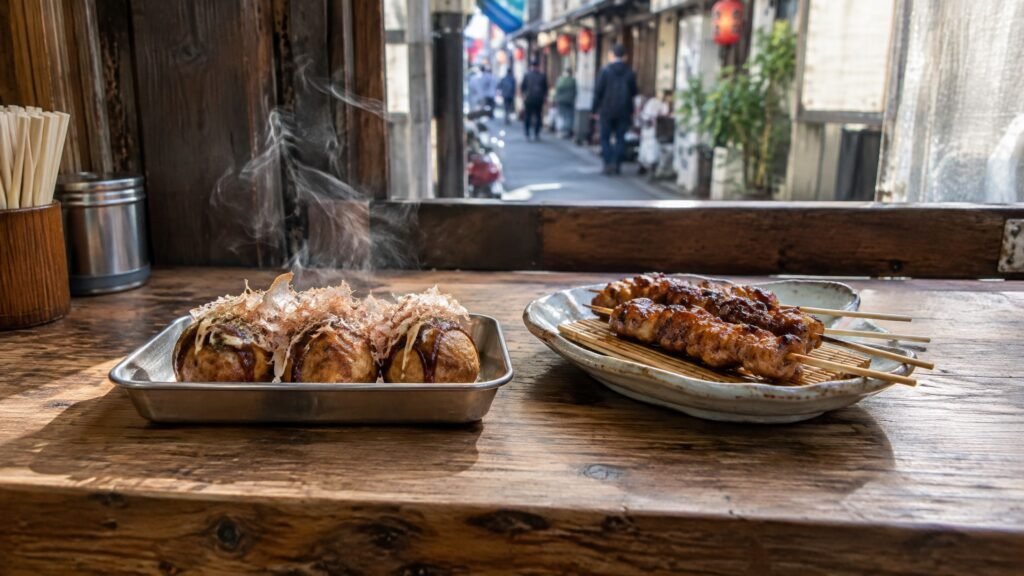
- Food and plant-based eating: a guide who can explain ingredients and etiquette, and who translates dietary needs clearly at each counter. Our guide on how to choose a food tour in Japan goes further on this one.
- Anime and pop culture: someone who knows which arcades and shops are worth your limited hours. Here is what a Tokyo day planned for anime fans can look like.
- Kyoto hiking: a guide comfortable with trail pacing, footing and turning back when the weather asks for it.
- Family days: pacing built around kids’ energy, snack stops and short walking stretches, as in our private day tours planned for families.
A specialist won’t automatically be the right guide for every part of your trip. A hiking expert might be an average choice for an evening of izakaya hopping, and that’s fine, as long as you’ve named your priority up front.
When a Generalist Is the Smarter Pick
If this is your first visit and you want a taste of everything, a generalist can be the better choice. You may not know yet whether you’re a market person, a temple person or a neon-and-arcades person, and a broad guide helps you find out in a single day.
A generalist also suits groups with mixed tastes, where one person wants gardens and another wants gaming shops. The key is the same as with a specialist: ask to see a sample day, and check that it flows from one interest to the next without feeling like a checklist.
Flexibility: How Far a Good Guide Can Bend the Plan
Flexibility works on two clocks. Before the day, it shows in how willing a guide or company is to reshape the itinerary around you. On the day, it shows in how they adjust when reality shifts.
This is where customization stops being a slogan and starts being something you can feel. Our model rests on local guides and flexible customization, a deliberate contrast to generic sightseeing, so we pay close attention to how this plays out in practice.
Before booking, you should be able to change the pace, swap stops and reorder the day. Want a slow morning and a long lunch? That’s a reasonable request. Want to drop a famous spot you don’t care about for a neighborhood you’ve never heard of? A flexible guide will suggest how.
On the day, watch how the guide handles three moments: a crowd that’s far bigger than expected, rain that arrives early and a group whose energy dips after lunch. Good guides don’t cling to the script. They shorten the walking, move an indoor stop forward or add a coffee break, and they tell you what they’re changing and why.
Questions About Changes, Cancellations, and Weather
Ask these before you pay, and get the answers in writing:
- How many itinerary changes can you make before the day, and by when?
- What happens to the booking if you need to cancel or move the date?
- If the weather turns, who decides on the swap, and what are the backup stops?
- If your group’s energy drops, can the day be shortened without penalty?
The answers don’t have to be generous, but they have to be clear. A company that can explain its cancellation terms in two sentences usually runs the rest of the day just as cleanly.
Pricing and Inclusions: Transparency That Builds Trust
A tour price only makes sense once you know what it covers. The guide’s fee is one piece, and costs alongside it, such as transport, entry fees and meals, may or may not sit inside the number you’re quoted.
So ask which of those the operator includes, and which you’ll pay on the day. Also ask how the fee changes with the number of hours and the size of your group, because a longer day or an extra guest can shift the total in ways that aren’t obvious from a headline price.
The explanation should arrive in writing: what’s included, what’s not and the cancellation terms. If a quote is a single number with no breakdown, you can’t compare it with anything, and you shouldn’t try. For a fuller picture of the money questions that come next, see what private day tours in Tokyo cost.
We won’t throw numbers at you here, because the honest answer depends on your hours, your group and the day you’ve built. A clear written quote does the job better than a range.
Hiring a Local Guide in Japan: Pre-Booking Tips and Red Flags
By this point you know what you need and what to ask. Before you pay anyone, settle four trust steps:
- A named guide. You should know who’s guiding you, not just which company.
- A written itinerary. Even a draft shows how the day will run and what’s included.
- Clear cancellation terms. Read them before the deposit, not after.
- A contact who answers before the trip. How fast and how well they reply now is the best preview of how they’ll behave later.
You’ll find a longer set of prompts in the full Tokyo question list before you book, and it pairs well with this shorter checklist.
Red Flags That Should Pause a Booking
Stop and ask more questions if you see any of these:
- Credentials that stay vague when you ask for specifics.
- No named guide until after you’ve paid.
- Pressure to pay in full immediately, especially with a “last spot” deadline.
- An itinerary that is only a list of famous places with no reasoning.
- Slow, evasive or copy-and-paste answers to a direct question.
One red flag doesn’t mean a company is bad. But several together mean you’re being asked to trust more than you’ve been shown.
When you’re ready to act, here’s how our Tokyo private guide booking works. And if you’d like a hand first, tell us your group size, your dates, your interests and whether anyone in your group speaks Japanese. We’ll help match you with a guide who suits the trip.
Frequently asked questions
Does my private guide in Japan need a national license?
Not necessarily. The national guide-interpreter credential is a strong signal, but experience, specialty and fit matter too, and some excellent guides hold no formal credential. What you should insist on is a straight answer about which credential, if any, the person guiding you holds, and whether it covers the area you’ll visit.
How can I check a guide’s English before booking?
Send one specific written question about your planned route, such as how they’d handle lunch for a guest who doesn’t eat fish. Judge the reply on detail and clarity: real places, plain explanations and a problem spotted before you raised it. A short call can add a sense of their speaking style.
Should I pick a specialist or a generalist guide?
Pick a specialist when your trip has one clear focus, such as food, anime, or hiking in Kyoto. Pick a generalist for a broad first visit or a group with mixed tastes. Either way, ask for a sample route so you can see the expertise rather than just a label.
What should a written quote for a private guide include?
It should say what the price covers, what it doesn’t, and the cancellation terms. Ask specifically about transport, entry fees and meals, and how the fee changes with the hours and group size. A single unexplained number is a reason to ask more questions.
Is it a red flag if a company asks me to pay in full right away?
It can be, particularly when it comes with pressure or a deadline and you haven’t seen a named guide, a written itinerary or clear cancellation terms. Ask for those first. One red flag isn’t conclusive, but pressure to pay before you have the details is a good reason to pause.