After 12-plus years of running food tours across Japan, our guides have walked thousands of international visitors through their first bowl, and questions about etiquette come up every single time. Knowing how to eat ramen in Japan etiquette-wise isn’t about following a rigid rulebook. It’s about slipping into the rhythm of one of Japan’s most beloved rituals and getting so much more out of every bite.
Ramen shops are intimate places. Many seat fewer than a dozen people. The chef is often right in front of you, ladling broth they’ve simmered for 18 hours or more. When you understand the unspoken customs, you stop being a tourist staring at a menu and start feeling like a regular. That shift, from observer to participant, is what makes a bowl of ramen in Japan genuinely unforgettable.
Why Ramen Etiquette in Japan Actually Matters
Japan has tens of thousands of ramen restaurants, from tiny eight-seat counter shops to multi-floor ramen department stores. It’s one of the most competitive and regionally diverse food categories in the country. Each shop has its own personality, its own broth philosophy, and often its own house rules posted on the wall.
Ramen etiquette isn’t about avoiding embarrassment. It’s about respect, for the craft, the chef, and the other diners packed in around you. A ramen-ya runs on rhythm. Broth is hot, seats are scarce, and the cook is watching how every bowl lands. When you know the customs, you honour that rhythm. The experience deepens because you’re genuinely inside it, not watching from the outside.
How to Order Ramen in Japan: Vending Machines, Counters & What to Say
Most ramen shops in Japan use one of two ordering systems: a ticket vending machine at the door, or a direct counter order. Knowing how to navigate both is the first practical piece of ramen etiquette Japan visitors need.
Reading the Ticket Vending Machine (券売機)
The ticket vending machine, kenbaiki in Japanese, is your first interaction with the shop, and it’s simpler than it looks. Here’s the basic process:
- Insert cash (coins or notes; most machines don’t accept cards, though this is slowly changing).
- Press the base ramen button, usually the largest button, often highlighted or priced highest.
- Add toppings, extra chashu, soft-boiled egg (ajitama), bamboo shoots, extra noodles, each has its own button.
- Collect your ticket(s) and hand them to the staff when you sit down.
If the machine is in Japanese only, look for pictures or prices. The most expensive button is almost always the signature bowl. When in doubt, press that one, you rarely go wrong.
Sitting at the Counter and Customising Your Bowl
Once seated, a staff member will usually ask you a few quick customisation questions. This is where knowing the vocabulary pays off:
- Kotteri / Assari, rich, heavy broth vs. light, clear broth
- Katamen / Yawarakai, firm noodles vs. soft noodles (firm is katamen, very firm is barikata)
- Ninniku ari/nashi, with or without garlic
- Abura ōme/sukuname, extra oil or less oil
If you’re at a Hakata-style tonkotsu shop in Fukuoka, or any tonkotsu spot that’s adopted the tradition, learn one more word: kaedama. Hakata-style tonkotsu shops pioneered the kaedama system, where you finish your noodles, shout “kaedama!” and receive a fresh portion dropped into your remaining broth for a fraction of the original price. It’s a custom so beloved it has spread to tonkotsu shops across Japan. Leave a little broth in the bowl, call it out, and enjoy round two.
The Great Slurping Debate: Ramen Slurping Etiquette Explained
Few topics generate more anxiety among first-time visitors than ramen slurping etiquette. Here’s the honest answer: slurping is natural, appreciated, and deeply rooted in practical reason, but it is not compulsory.
When you slurp noodles, you pull air through the broth at the same time. That aeration genuinely enhances the flavour, the same principle behind aerating wine. It also cools scalding-hot noodles as they travel to your mouth, which matters when the broth is served at near-boiling temperature. Japanese diners slurp instinctively because it works.
That said, no ramen chef will look at a quietly eating foreign visitor and feel insulted. The culture around Japanese ramen customs is welcoming, not gatekeeping. Slurp if it feels natural, and it probably will once the bowl is in front of you. Don’t stress if it doesn’t. What matters far more is engagement: lean into the bowl, eat with focus, and drink the broth.
Japanese Ramen Customs at the Table (and the Counter)
Beyond ordering and slurping, there are a handful of ramen restaurant etiquette rules that make a real difference, especially at busy, high-reputation shops.
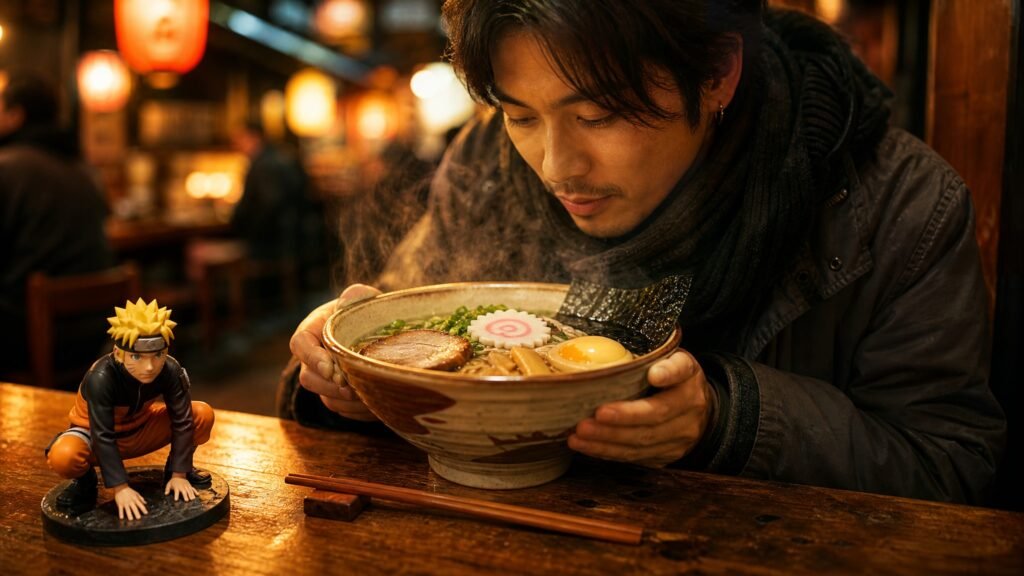
Eat promptly. Ramen is engineered to be eaten hot and fast. Noodles continue cooking in the broth even after the bowl arrives. Every minute you wait for a photo, the noodles soften and the experience diminishes. Snap your shot quickly, then eat.
Don’t linger after you finish. Ramen-ya operate on fast turnover. There’s almost always a queue outside popular shops. Finishing your bowl and sitting for another 20 minutes over your phone is the one thing that genuinely inconveniences everyone around you.
Keep phone use minimal. A quick photo of the bowl is fine, expected, even. But taking calls, filming long videos, or scrolling while eating breaks the concentrated, almost meditative atmosphere a good ramen counter creates.
Don’t share bowls. Ramen is a solo meal. Each person orders their own bowl. This isn’t antisocial, it’s part of what makes ramen uniquely democratic and personal.
Solo Dining, Speed & the Unspoken Queue Rules
At Ichiran in Fukuoka, arguably the world’s most famous solo-dining ramen chain, individual booth dividers are built into the counter specifically to let you focus entirely on your bowl, a design philosophy that tells you everything about how seriously Japan takes the ramen moment.
Queue rules are equally important at famous shops. Join the line, wait your turn, and don’t send someone ahead to hold spots for a large group. Most popular shops manage their queues carefully, staff will note your group size, hand you a ticket, and call you when a run of seats opens. Trust the system. It works.
If you enjoy the broader ritual of eating like a local on an Osaka street food tour, you’ll find the same respectful, queue-first culture running through every great food experience in Japan.
Regional Ramen Styles Across Japan: What to Expect Where
Japanese ramen customs shift meaningfully as you travel. Understanding regional styles helps you order confidently and appreciate what’s in front of you.
Sapporo (Hokkaido), Miso Ramen
Sapporo’s signature is a rich miso-based broth, often topped with sweet corn, butter, and stir-fried vegetables. Shops here tend to be informal and generous with portions, suited to the northern winters. Expect loud, cheerful atmospheres and don’t hesitate to ask for extra corn.
Tokyo, Shoyu & Shio Ramen
Tokyo’s classic ramen is lighter, a clear chicken-and-soy (shoyu) or salt-based (shio) broth with thin, wavy noodles. Shops are quick and no-fuss. The etiquette here leans toward brevity: order efficiently, eat focused, leave promptly. For a deeper dive into Tokyo’s food culture, consider a guided Tokyo food tour with local experts, our guides know exactly which counter seats to grab and when.
Fukuoka (Hakata), Tonkotsu Ramen
Fukuoka is tonkotsu ground zero: a creamy, pork-bone broth so rich it coats the bowl, served with thin, straight noodles and the kaedama refill system. Shops here are fast, loud, and gloriously unpretentious. Knowing the kaedama call and your preferred noodle firmness makes you feel immediately at home.
Kyoto, Chicken-Soy (Tori Paitan / Shoyu)
Kyoto’s ramen scene has its own restrained elegance, a rich but refined chicken-and-soy broth, sometimes with a hint of niboshi (dried sardine). Portions suit Kyoto’s quieter dining culture, and the atmosphere in many shops mirrors the city itself: considered and calm. If you’re spending time there, exploring vegetarian-friendly spots in Kyoto alongside your ramen stops makes for a well-rounded food day, or pair it all with a private guided day in Kyoto with a local who knows both sides of the menu.
Insider Tips From Our Local Guides: Get the Most Out of Every Bowl
We’ve spent over a decade refining these suggestions, and we share them on every food tour we run.
Go off-peak. The sweet spot is 2–4 pm on a weekday, after the lunch rush, before dinner queues form. You get calmer service, more time to customise, and a relaxed counter atmosphere.
Use the free toppings bar. Many ramen shops offer a counter of complimentary add-ons: pickled ginger, sesame seeds, crushed garlic, spicy bean paste. These aren’t decoration. Add them in stages as you eat, so each part of the bowl tastes slightly different.
Drink the broth. Ramen shop owners across Japan consistently say the highest compliment a customer can pay is drinking the broth to the very last drop, it signals that nothing went to waste and the chef’s work was truly appreciated. Pick up the bowl, tip it gently, finish it. That small gesture carries real weight.
Look down and underground. Some of Japan’s best ramen-ya hide in basement arcades, train station underpasses, and side-street yokocho alleyways. Famous tourist streets are rarely where the best bowls are. Follow the queue of locals, not the signage in English.
Learn three phrases. “Katamen de onegaishimasu” (firm noodles, please), “kaedama” (noodle refill), and “oishikatta desu” (that was delicious) will take you a long way at any counter in the country.
Knowing how to eat ramen in Japan etiquette-wise is genuinely one of the most rewarding bits of travel preparation you can do, because a great ramen bowl in Japan isn’t just lunch. It’s a window into a food culture that takes both craft and community seriously.
If you’d rather experience it all with someone who already knows every custom, every kaedama shout, and every hidden basement shop, we’d love to have you join us. Our food tours in Tokyo and Osaka are built exactly for this: no guesswork, just great bowls and great company.