Japan rewards the traveler who plans around its rhythm. Every season brings a different Japan, cherry-dusted parks in spring, thundering taiko drums at summer matsuri, crimson hillsides in autumn, and snow sculptures glowing under winter lights. Getting seasonal festivals japan travel planning right means you don’t just visit Japan; you arrive at exactly the right moment to witness something irreplaceable. This guide gives you the full festival calendar, practical booking timelines, and honest crowd warnings so you can make that happen in 2026 or 2027.
Why Build Your Japan Trip Around Seasonal Festivals
Most visitors pick a destination, then check what’s happening. We’d flip that.
Japan’s matsuri aren’t tourist shows, they’re living rituals that have run for centuries, tied to harvests, deities, and community identity. A shrine procession, a bon dance, or a hanabi finale over a summer river gives you access to Japanese culture that no museum or temple visit can replicate.
Building your itinerary around festivals also forces useful decisions. It narrows your travel window (helpful when Japan has endless choices), it anchors accommodation bookings so you act early, and it gives every day of your trip a focal point beyond sightseeing. The trade-off is real crowd pressure at peak events, but this guide will show you how to manage that rather than avoid festivals entirely.
One practical note: some festivals fall on fixed calendar dates every year, making them easy to plan around. Others, particularly those tied to lunar cycles, government-designated “respect for the aged” Mondays, or cherry blossom bloom predictions, shift by days or even weeks. We’ll flag which is which as we go.
Japan Spring Festivals: Cherry Blossoms, Shrine Rituals & Golden Week
Cherry Blossom Season Planning (Late March, Early May)
Japan’s cherry blossom season is the most famous, and most misunderstood, festival window of the year. Hanami (flower viewing) isn’t a single event with a fixed date; it’s a rolling wave that moves north across the country from late March to early May.
Timing shifts dramatically by latitude: Kyushu and Tokyo typically see peak bloom in late March to early April, while Tohoku and Hokkaido don’t peak until late April or early May. That means a two-week trip can follow blossoms northward through multiple regions, a genuinely magical strategy if you plan it right. Peak bloom timing in Tokyo has historically clustered around the last week of March and first week of April, though year-to-year variation of five to ten days is normal.
Key spring festivals to pair with hanami:
- Hirosaki Castle Cherry Blossom Festival (Aomori, late April, early May): One of Japan’s most spectacular settings, around 2,600 trees surround a feudal castle. Peak bloom in Tohoku comes late, so this extends your spring travel window well into May.
- Takato Castle Park (Nagano, late March, mid April): Famous for its deep-pink kohigan cherry variety, distinct from the pale Somei Yoshino that dominates Tokyo.
- Shinjuku Gyoen & Maruyama Park (Tokyo & Kyoto): Urban hanami hotspots, packed, but worth it for the atmosphere.
Bloom timing is never guaranteed. The Japan Meteorological Corporation releases annual forecasts, and serious planners should check updates in January or February before booking.
Golden Week Festivals and What to Watch Out For
Golden Week (late April through early May) bundles four national holidays into one stretch, sending tens of millions of Japanese travelers on the move simultaneously. Some years, when the calendar aligns, the run extends to nine or ten consecutive days off.
The upside: lively local matsuri fire up across the country, including the Hakata Dontaku Festival in Fukuoka (May 3–4), one of Japan’s largest street festivals by attendance. The downside: Shinkansen seats, hotels, and tourist sites fill to maximum capacity. JR Pass holders should note that the pass cannot be used for seat reservations on certain Nozomi and Mizuho Shinkansen services, and popular trains during Golden Week sell reserved seats weeks out.
Our advice: if your dates fall inside Golden Week, double down on a single city rather than trying to move around. Book transport the moment reservations open, usually a month in advance for JR trains.
Summer Matsuri Japan: Fireworks, Obon & the Festival High Season
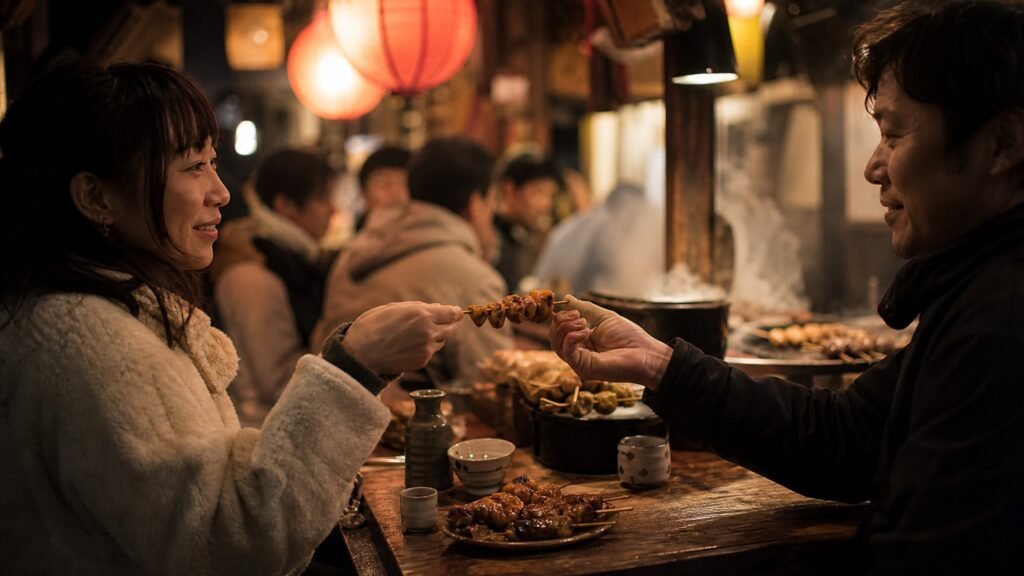
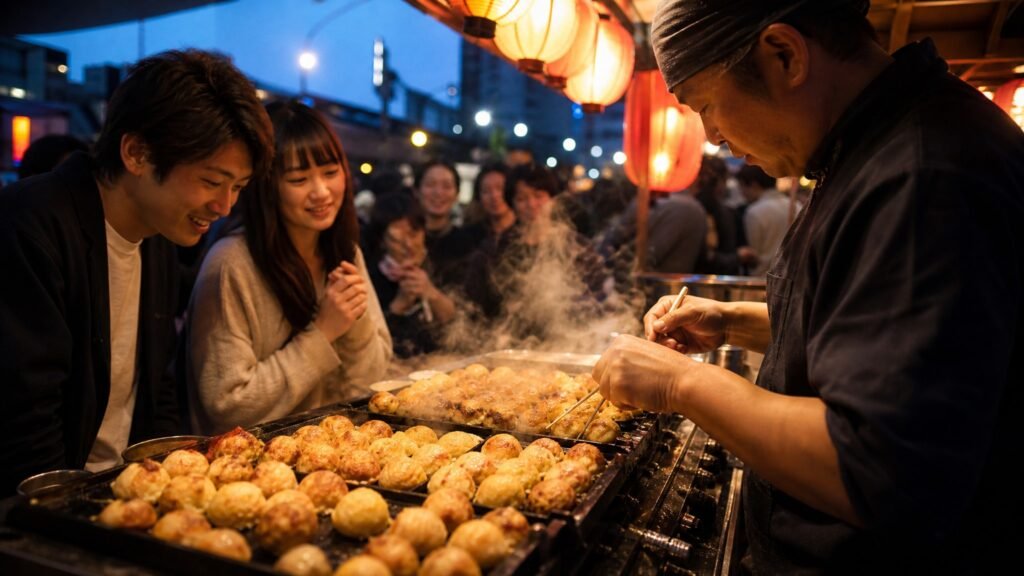
Summer is Japan’s festival high season. From late June through August, virtually every town runs its own matsuri, and the big national events pull enormous crowds. This is also when Osaka’s street food scene during summer festival season shifts into high gear, with yatai (street stalls) selling takoyaki, kakigori, and grilled skewers outside every shrine gate.
Gion Matsuri Kyoto: Dates, Crowds & How to Experience It Right
Gion Matsuri is Japan’s most famous festival, and the one most tourists experience only partially, because most coverage treats it as a single event rather than the month-long ritual it actually is.
Gion Matsuri runs across the entire month of July in Kyoto, split into two distinct procession weeks: Saki Matsuri (first procession on July 17) and Ato Matsuri (second procession on July 24). Most visitors target July 17 and miss the Ato Matsuri entirely, which is a shame, because the second procession has shorter crowds and several floats (yamaboko) that don’t appear in the first. The Yoiyama evenings (July 14–16 and July 21–23) are when Kyoto’s old town fills with lantern-lit floats and yukata-clad locals. These nights are often more atmospheric than the procession itself.
Crowd levels during Gion Matsuri are intense by any standard. After more than 12 years running guided experiences across Japan, our team has watched Gion Matsuri accommodation in central Kyoto sell out six or more months ahead. Guests who book late routinely end up commuting from Osaka, which changes the experience entirely. If Gion Matsuri is on your list for 2027, start accommodation research now. A private guided day in Kyoto during Gion Matsuri lets you move through the crowds with someone who knows exactly where to stand and when.
Obon, Awa Odori & Regional Fireworks Shows
Obon, the Buddhist festival honoring ancestral spirits, runs in mid-August (typically August 13–16 in most regions, though some areas follow a lunar calendar and observe it in July). It’s both a deeply personal family event and the trigger for some of Japan’s biggest public celebrations.
Awa Odori in Tokushima (August 12–15) is one of Japan’s largest dance festivals. What makes it unique is participation: the line between performer and spectator dissolves completely, and visitors are actively invited onto the street to join the ren (dance groups). If you want to do matsuri rather than just watch it, Awa Odori is your festival.
Obon week is also the second-biggest domestic travel crunch of the year after Golden Week. Roads, trains, and airports spike sharply around August 11–16. Plan accordingly.
Top summer fireworks (hanabi) shows worth timing a trip around:
- Sumida River Fireworks Festival, Tokyo (late July), one of the city’s oldest, dating to the Edo period
- Nagaoka Fireworks, Niigata (August 2–3), considered among the technically finest in Japan
- Lake Suwa Fireworks, Nagano (August 15), spectacular lakeside setting during Obon
Autumn Festivals Japan: Foliage, Harvest Rites & Temple Ceremonies
Autumn is, in our honest opinion, the best season for first-time visitors. Temperatures drop to comfortable levels (roughly 15–25°C across most of Honshu in October), crowds ease compared to spring, and the combination of koyo (autumn foliage) and festival culture is hard to match anywhere in the world.
Foliage Timing by Region and the Festivals That Coincide
Like cherry blossoms, autumn color moves north to south and altitude to coast, but in reverse. Hokkaido peaks in late September to mid-October; Tokyo and Kyoto peak in late November. That gives travelers a wide window to find autumn at its most vivid.
Key autumn festivals to plan around:
- Jidai Matsuri, Kyoto (October 22): Fixed date. A two-kilometer historical procession through central Kyoto, with participants dressed in costumes spanning 1,200 years of Japanese history. Lower-key than Gion Matsuri crowd-wise, but deeply impressive.
- Nikko Toshogu Autumn Festival, Tochigi (October 17): Fixed date. Armor-clad horseback archery (yabusame) and processions at one of Japan’s most ornate shrine complexes, set against peak maple foliage.
- Kurama Fire Festival, Kyoto (October 22): Same night as Jidai Matsuri, a more intimate torchlight procession in the mountains north of Kyoto.
- Regional harvest matsuri: Hundreds of smaller autumn shrine festivals run throughout September and October, celebrating the rice harvest. These are often the most authentic matsuri experiences, free from tour-group crowds.
You can easily combine Nara’s autumn shrine festivals with a Kyoto or Osaka base, Nara is 45 minutes from both cities by train, and its deer park and Kasuga Grand Shrine hit peak color in November.
The food dimension of autumn festivals is worth planning around too: roasted chestnuts, matsutake mushroom dishes, and sweet potato confections show up at stalls across the country. The traditional foods tied to each festival season are their own reason to travel.
Winter Festivals Japan: Illuminations, Snow Festivals & New Year Traditions
Winter gets overlooked, and that’s partly what makes it good. Outside of a few key events, crowds thin out, accommodation prices drop, and Japan’s cities feel genuinely local again.
Hatsumode, the first shrine visit of the New Year, is Japan’s most universally observed tradition. Millions visit shrines on January 1–3, with the largest turnouts at Meiji Jingu (Tokyo), Naritasan Shinshoji (Narita), and Fushimi Inari (Kyoto). Those three days are crowded; the days surrounding them are calm.
Nara Wakakusa Yamayaki (late January): The grassy slope of Mount Wakakusa is set ablaze in a dramatic annual ritual, one of Japan’s more visually striking and undervisited winter events.
Sapporo Snow Festival (Yuki Matsuri, early February): Every February, Odori Park fills with enormous snow and ice sculptures, drawing visitors from across Asia. Accommodation in Sapporo during festival week is some of the hardest to secure anywhere in Japan, book at least four to six months ahead. Outside that one week, Hokkaido in winter is quiet and extraordinary.
Winter illumination events (illumination) run from November through February in every major city, teamLab events, Nabana no Sato in Mie Prefecture, and Tokyo Midtown’s Starlight Garden are consistent standouts. These aren’t traditional matsuri, but they’re a genuine cultural phenomenon worth including in a winter itinerary.
How to Plan Around the Japan Festival Calendar: Practical Tips for 2026–2027
Good seasonal festivals japan travel planning is really logistics planning, the experiences themselves are waiting for you. Here’s how to get the mechanics right.
Booking Accommodation, Transport & Experiences Around Peak Dates
Accommodation lead times by event:
| Festival | Location | Recommended booking lead time |
|---|---|---|
| Gion Matsuri (July) | Kyoto | 6+ months ahead |
| Cherry blossom season | Tokyo, Kyoto, Osaka | 4–6 months ahead |
| Golden Week | Nationwide | 3–4 months ahead |
| Sapporo Snow Festival | Sapporo | 4–6 months ahead |
| Obon week | Nationwide | 2–3 months ahead |
| Jidai Matsuri (Oct 22) | Kyoto | 2–3 months ahead |
For Kyoto specifically: central hotels during Gion Matsuri and cherry blossom season book out so far in advance that searching in January for July is not too early. Guesthouses and smaller ryokan outside the central Gion district offer lower prices and a more local feel, but they go fast too.
JR Pass and transport:
The JR Pass remains a strong value for travelers covering multiple regions. It cannot be used for seat reservations on Nozomi or Mizuho Shinkansen services. During Golden Week and Obon, free-seating cars on popular routes fill up. Book reserved seats the moment the 30-day advance reservation window opens.
Fixed vs. moveable festivals:
Fixed-date festivals (Jidai Matsuri on October 22, Nikko Toshogu on October 17, Awa Odori on August 12–15) let you book flights months out with confidence. Moveable ones, cherry blossom peak, some lunar-calendar festivals, require flexibility. Building two to three days of buffer into a blossom-chasing itinerary is standard practice, not overcaution.
Getting beyond spectating:
The richest festival experiences involve participation, not just observation. Awa Odori invites you to dance. Many summer matsuri welcome visitors to help carry mikoshi (portable shrines). Local guides unlock the layer of meaning behind what you’re seeing, and know the timing details that turn a crowded street into a transformative moment. If you want to explore Tokyo’s festival-season street food with a local guide, that combination of matsuri context and culinary culture is exactly where we operate.
We build custom itineraries timed around whichever season speaks to you, a private Kyoto day tour during Gion Matsuri’s Yoiyama evenings, a cherry blossom food walk in Tokyo, or a multi-day autumn circuit through Kyoto, Nara, and Nikko. Reach out to the Washoku Club City team and tell us which festival is calling you. We’ll build the rest around it.