Summer in Tokyo means drums echoing through side streets, the smell of grilled squid drifting from food stalls, and skies lit up with fireworks over the Sumida River. If you’re planning a trip between June and September 2026, you’ve landed in the right spot. We built this Tokyo summer festivals 2026 guide as a living calendar. We keep it updated as official dates get confirmed, so you can actually plan around it instead of guessing.
Your Living Tokyo Summer Festivals 2026 Guide: How to Use This Calendar
Think of this page as a planning companion, not a one-time listicle. We’ll keep refining it as venues and shrine associations lock in their 2026 schedules. Our local guides have led guests through Tokyo’s summer matsuri circuit for over 12 years, timing routes around fireworks launches and food stall lines that guidebooks miss. That experience shapes everything below.
For date-by-date specifics as they firm up, our full Tokyo summer matsuri dates and etiquette guide tracks the granular details neighborhood by neighborhood.
Why 2026’s Matsuri Calendar Keeps Shifting
Most Tokyo matsuri organizers confirm exact dates only a few months before the event. Weather, shrine schedules, and city permits all play a role. So treat the dates in this guide as best-available estimates based on typical yearly patterns. Reconfirm them as your travel dates get closer.
That said, the rhythm of Tokyo’s summer festival season is reliable. Fireworks cluster in late July. Temple festivities run through the season, and modern city events fill in July and August. Knowing that rhythm lets you build a rough itinerary now and fine-tune the exact days later.
Sumidagawa Fireworks Festival Tokyo 2026: Dates, Location, and Viewing Spots
The Sumidagawa Fireworks Festival is Tokyo’s most iconic summer fireworks event, held over the Sumida River between Asakusa and Mukojima. It typically lands on the last Saturday of July, which in 2026 points to July 25, though organizers usually confirm the final date only a couple of months out. Two firing points send thousands of shells into the sky over about ninety minutes, and crowds pack both riverbanks and nearby bridges.
The Sumidagawa Fireworks Festival remains one of Tokyo’s oldest and most crowded summer events. Dense riverside crowds line Asakusa and Mukojima from mid-afternoon onward. If you want a seat with a view, plan to stake out your spot well before sunset.
Best Neighborhoods for Fireworks Viewing: Asakusa vs. Mukojima
Asakusa gives you the classic postcard shot, with fireworks framed against the Tokyo Skytree and the Sumida riverside promenade packed shoulder to shoulder. It’s lively, loud, and photogenic. It’s also the most congested stretch of the whole event.
Mukojima, on the opposite bank, tends to feel a touch calmer while still offering a strong view of the first firing point. If you’d rather trade a few degrees of proximity for breathing room, Mukojima’s riverside paths are worth the short walk from the main Asakusa crush.
Sumidagawa Crowd Tips and Timing
Arrive by early afternoon if you want a specific spot, especially anywhere near Azumabashi Bridge or Sumida Park. Trains into Asakusa Station get packed hours before the first shell fires, and again for hours afterward as everyone tries to leave at once.
A few practical moves help: bring cash for food stalls, pack a light mat to sit on, and consider watching from a slightly farther vantage point like Mukojima or a riverside restaurant with a reserved view. Leave the immediate area 20-30 minutes before the finale, rather than right after. It can save you a long wait for trains.
Senso-ji Matsuri Tokyo Summer 2026: Temple Festivals in Asakusa
If fireworks night feels overwhelming, Asakusa’s temple festivals offer a gentler complement. Senso-ji’s summer events pair temple visits with lantern-lit evenings along Nakamise-dori, the historic shopping street leading up to the temple gate. Expect hozuki (Japanese lantern plant) markets, evening illuminations, and a calmer crowd than fireworks night, though still lively by any normal city standard.
Evenings here feel more contemplative. Paper lanterns glow, incense drifts from the main hall, and vendors sell traditional snacks rather than festival-scale crowds of fried food carts.
Combining Senso-ji Visits With Nearby Street Food
Nakamise-dori is lined with small shops selling age-manju, senbei, and ningyo-yaki, the small castella-style cakes shaped like little figures. Visit in the early evening, just as lanterns switch on, and you can browse without fighting the density of a full matsuri crowd.
Pair a Senso-ji evening with a walk toward the river for a light dinner, then decide whether you want to loop back for a quieter night or head toward one of the bigger festival zones. If you’re building out a fuller Tokyo itinerary around temple visits and street food, a deeper dive into Tokyo’s 2026 matsuri dates can help you sequence multiple events across a single trip.
Roppongi Hills Summer Festival 2026 and Other Modern Tokyo Summer Events
Not every Tokyo summer festival centers on shrines and lanterns. Roppongi Hills typically runs a summer festival featuring an outdoor beer garden, art installations, and evening events across its plaza and rooftop spaces. It’s a useful contrast if you want summer festival energy without the traditional matsuri format: think cocktail bars and DJ sets rather than taiko drums and portable shrines.
This kind of modern city event tends to run through much of July and August, with a more relaxed, come-and-go structure than a single-night matsuri. You won’t need to fight for a fireworks-viewing spot, and reservations for restaurants and rooftop bars are usually easier to manage.
Tokyo Summer Events July August 2026 Beyond the Traditional Matsuri
Beyond Roppongi Hills, look for pop-up beer gardens across department store rooftops, outdoor cinema nights in parks like Yoyogi, and seasonal illumination events that start ramping up toward late summer. These give you flexibility on nights when the big matsuri crowds feel like too much.
If you’re staying near central Tokyo, a full day itinerary around Shibuya’s crossing and nightlife pairs well with an evening at one of these modern summer events, especially if you want city energy without a temple visit on the agenda.
Best Summer Matsuri Tokyo Neighborhoods to Explore
Tokyo’s neighborhoods each bring a distinct festival personality. Asakusa leans traditional, with temple festivals, lantern displays, and the historic character of Nakamise-dori. Roppongi leans modern, with outdoor bars, art, and a younger crowd. The riverside stretch between Asakusa and Mukojima becomes fireworks central for one massive night in late July.
Beyond these three, smaller neighborhood matsuri pop up across the city all summer, often organized by local shrines and shopping streets. These are usually less crowded, more community-focused, and a great way to see matsuri culture without the density of the headline events.
Choosing a Neighborhood Based on Your Travel Style
If you want the classic Tokyo festival photo and don’t mind crowds, Asakusa on fireworks night is unbeatable. If you’d rather sip a drink outdoors with skyline views, Roppongi’s modern events fit better. If you’re traveling with kids or prefer a slower pace, a neighborhood matsuri near your hotel, checked closer to your travel dates, often delivers the most authentic experience with the least hassle.
For a broader sense of how these festival types connect to Bon Odori traditions found across the country, neighborhood matsuri and Bon Odori traditions across Japan is a useful next stop, especially if your trip extends beyond Tokyo.
Tokyo Summer Festival Food Stalls Guide and Matsuri Etiquette
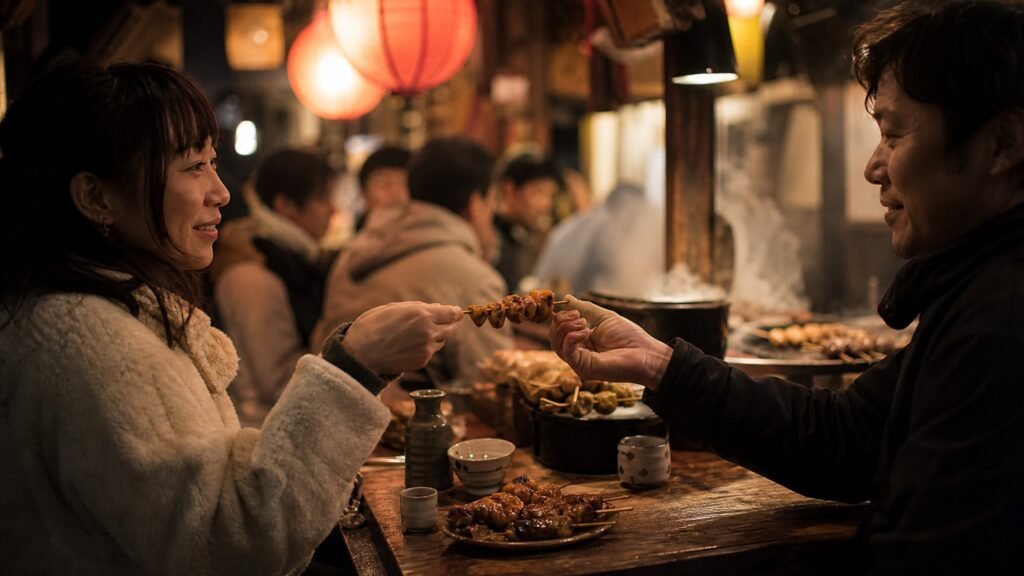
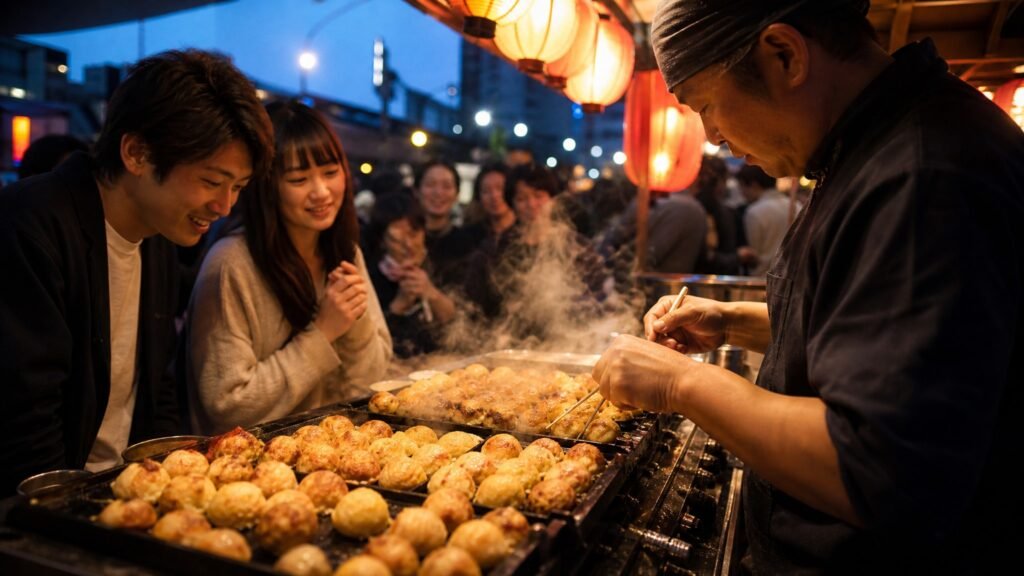
Festival food stalls, or yatai, are half the fun of any matsuri. Expect yakisoba, grilled corn, takoyaki, karaage, and shaved ice known as kakigori, often flavored with strawberry, melon, or matcha syrup. Prices are usually cash-only and fairly modest per item, so bring small bills and coins rather than relying on cards.
Yukata rentals and festival food stalls in neighborhoods like Asakusa and Roppongi typically sell out or form long queues within the first hour of a matsuri opening. Arriving early is the single biggest crowd-avoidance tip. If you want to rent a yukata for the evening, book or arrive well before the festival’s official start time.
Basic etiquette matters too. Queue politely at stalls rather than crowding around the counter. Dispose of your trash in designated bins, since public trash cans are rare. Keep noise respectful near shrine grounds even during the liveliest moments. If you’re wearing a yukata, small steps and a slower pace are part of the look, so don’t rush.
How to Experience Tokyo Matsuri Like a Local
Our guides recommend treating each matsuri as a food crawl first, festival second: arrive hungry, try three stalls before the crowds peak, then find your viewing spot. That sequence, food before fireworks, keeps you from standing in a long stall line right when the sky lights up.
It also means arriving earlier than you think you need to, especially for anything near Asakusa or the riverside. Locals who go every year know that the best food and the best sightlines both go to whoever shows up first.
If navigating all of this solo feels like a lot to juggle, that’s exactly the gap a guided evening fills. Our team knows which stalls sell out first, which riverside spots open up once the main crowd settles, and how to time a route between a temple visit, a food stall crawl, and a fireworks viewing point. For an idea of how we build food-focused days around local knowledge, booking a guided food-focused day tour in Tokyo shows the kind of hands-on approach we bring to matsuri nights too.
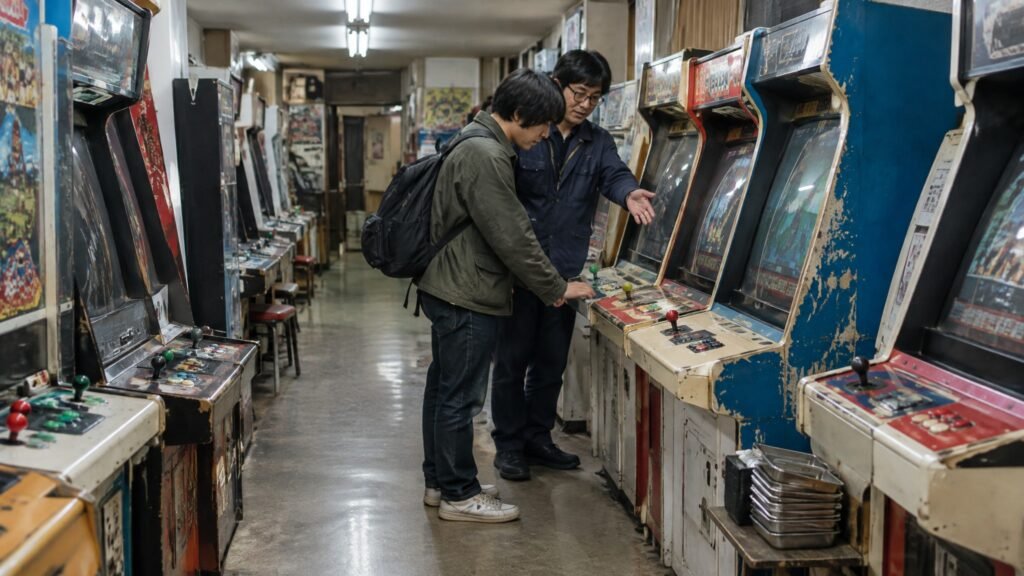
If you’re planning multiple festival nights across your stay, or want to extend your trip into other seasons, our complete seasonal festival planning calendar helps map out the bigger picture. And if you want to turn a festival evening into a full day, pairing a festival night with an Akihabara pop culture tour is a favorite combination among our guests.
Tokyo’s summer matsuri season rewards a little planning and a lot of appetite. Whether you’re chasing fireworks over the Sumida River, wandering lantern-lit streets near Senso-ji, or sipping something cold at Roppongi Hills, the season has room for every kind of traveler. If you’d rather skip the guesswork on crowds and timing, join us for a private guided evening and let us show you the matsuri the way we experience it every summer.