So many travelers land in Tokyo convinced they’ll survive on convenience store rice balls for a week. We hear it constantly: “Isn’t Japan just all meat and fish?” It’s an honest worry. It’s also a myth we love busting on our walks through the city’s back streets. Book a well-planned vegetarian food tour in Tokyo with a local guide, and it usually turns into the highlight of the trip, not the compromise people braced for.
Is Tokyo Really a Hard City for Vegetarians? Busting the Myth
Tokyo has a reputation for being tough on vegetarians. Some of that reputation is fair. But most of it comes from travelers who never had someone show them where to look.
Why ‘Japan is meat-heavy’ isn’t the full story
Traditional Japanese cooking, or washoku, grew up around rice, vegetables, tofu, seaweed, and soy. Meat only became an everyday part of Japanese meals in the last century or so. Before that, Buddhist dietary rules shaped much of the country’s food culture. That history means Tokyo’s kitchens are full of plant-based building blocks. They’re just not always labeled that way. You can read the full story of washoku cuisine to see how deep those roots go.
How dashi and hidden animal ingredients trip up solo travelers
The real obstacle isn’t a lack of vegetables. It’s dashi. This savory broth, often made from bonito flakes or fish stock, hides inside miso soup, simmered dishes, and even some vegetable sides. A menu can look perfectly plant-based and still contain fish. Without Japanese reading skills, or a guide who knows the kitchen, it’s easy to order something that isn’t vegetarian at all.
What Makes a Vegetarian Food Tour Tokyo Experience Different from Solo Dining
Plenty of guests tell us they tried to plan their own vegetarian meals before booking with us. Most gave up after a few frustrating exchanges with a phone translator app.
Reading menus and asking the right questions in Japanese
Google Translate can turn a menu into readable English. It can’t tell you that “vegetable tempura” was fried in the same oil as shrimp. It can’t tell you a broth uses fish stock by default either. Asking kitchen staff the right question in Japanese, phrased the way locals phrase it, gets a much clearer answer than pointing at a phone screen.
Finding neighborhood spots that don’t show up on English review sites
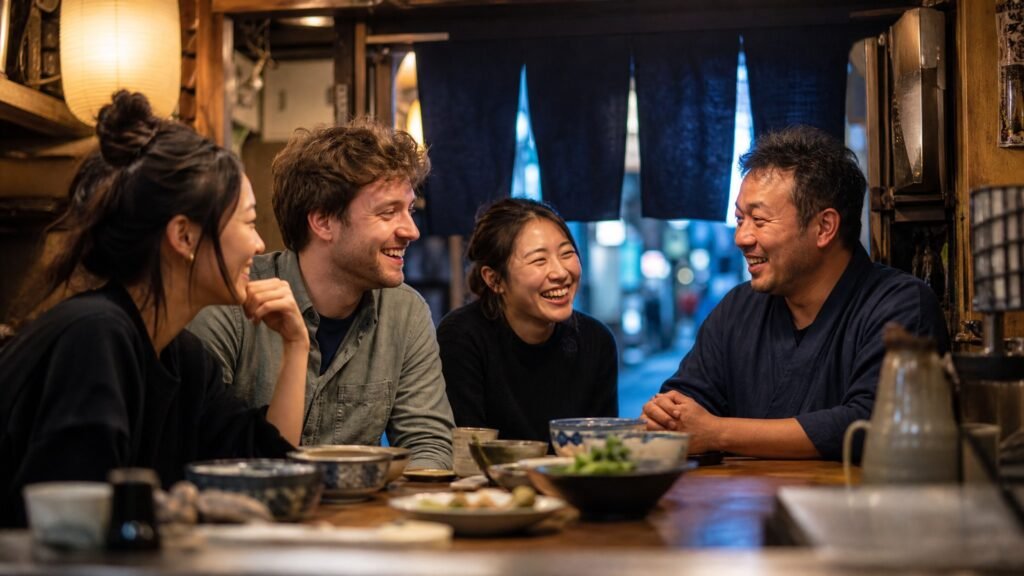
Some of Tokyo’s best vegetarian-friendly kitchens have no English signage, no English menus, barely any online presence. They run on regulars and word of mouth. Our local guides at Washoku Club City have spent over 12 years building relationships with family-run noodle shops, izakaya, and temple kitchens across Tokyo. We know exactly which ones will happily adjust a dish for vegetarian and vegan guests.
Shojin Ryori: Tokyo’s Buddhist Temple Cuisine Tradition
If you want to understand plant-based eating in Japan, shojin ryori is the place to start. This is the cuisine monks in Tokyo developed centuries ago, and it’s still served today.
What a shojin ryori tasting looks like
Shojin ryori, the Buddhist temple cuisine born in Japan’s monasteries, relies entirely on vegetables, tofu, seaweed, and grains. There’s no meat, no fish, and often no strong-smelling vegetables like garlic or onion, since monks believed those disturbed meditation. A typical tasting might include simmered root vegetables, sesame tofu, pickled greens, and clear vegetable broth. Every dish is balanced by color, texture, and the season it was picked in.
Where temple-style dining fits into a modern city food walk
You don’t need to travel far outside Tokyo to experience this tradition. A handful of temple-affiliated restaurants and shojin ryori specialists operate right within the city. On a guided walk, we treat a shojin-style stop as a quiet, grounding moment. It’s a chance to taste where Japan’s plant-based cooking actually began, before moving on to livelier street food and noodle counters.
Vegetarian Ramen, Street Food, and Izakaya: Where Locals Actually Eat
This is where the myth really falls apart. Tokyo’s ramen counters, market stalls, and izakaya all have plant-based options once you know which ones to ask for.
Vegetarian ramen and noodle shops worth seeking out
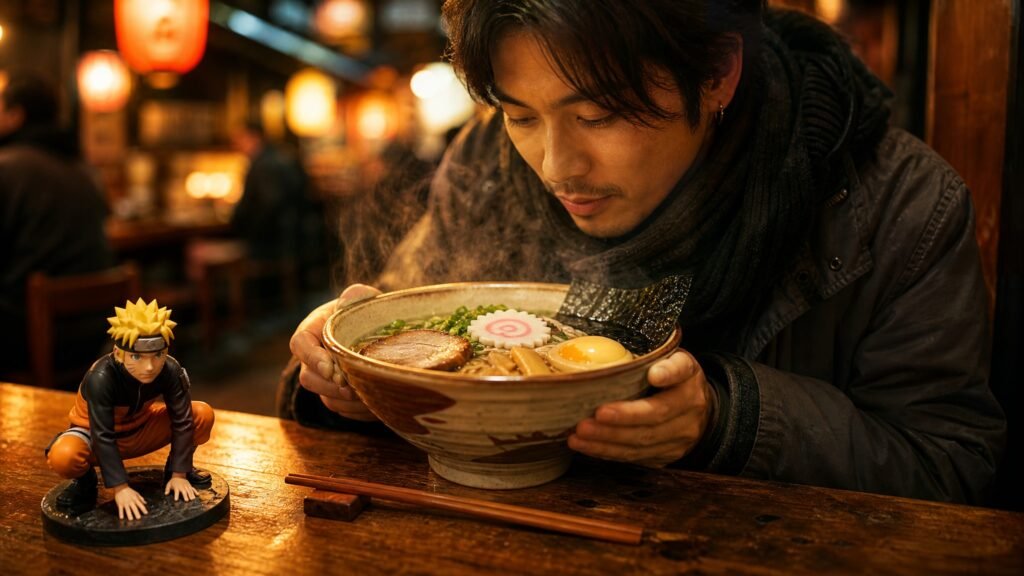
Classic ramen broth usually leans on pork bones or fish stock, so it trips up a lot of vegetarian travelers. But a growing number of Tokyo shops now make rich noodle broths from kombu, dried mushrooms, and soy. The flavor rivals the traditional versions. We’ve put together a full list of vegetarian ramen shops worth seeking out. Want to brush up on slurping etiquette before you go? Our ramen etiquette tips for first-timers cover the basics. Traveling with a mixed-diet group? Check our broader Tokyo ramen tour guide for non-vegetarian shops nearby.
Plant-based izakaya small plates for an evening food crawl
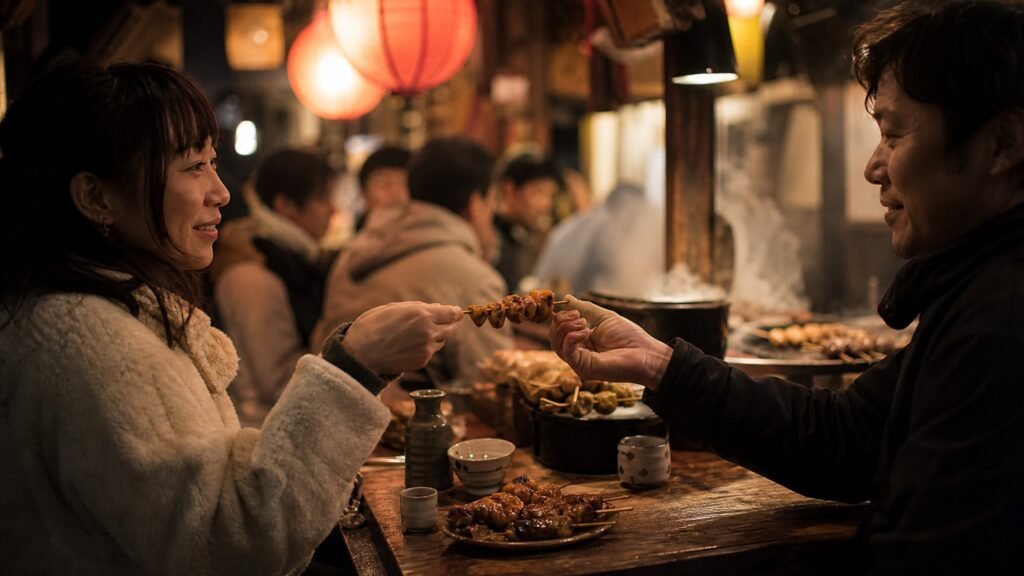
Izakaya, Japan’s casual after-work pubs, run on small shared plates. Many of those plates are naturally vegetable-based: grilled eggplant, edamame, simmered pumpkin, tofu hot pots, pickled cucumber. A plant-based izakaya crawl lets you sample several of these dishes across two or three stops in one evening, the way locals actually eat after work. If ordering feels intimidating, our guide on how to order confidently at an izakaya walks through the etiquette. Curious about vegetarian street food beyond restaurants? Morning markets also turn up grilled rice balls, roasted sweet potato carts, and vegetable tempura stands worth stopping for.
Exploring Tokyo Neighborhood by Neighborhood: A Vegetarian Kitchen Tour
Tokyo isn’t one food scene. It’s dozens of small ones stitched together, and each neighborhood has its own personality when it comes to vegetarian eating.
Old-town shitamachi streets vs. modern plant-based cafés
The shitamachi districts, Tokyo’s old working-class neighborhoods, hold onto generations-old noodle counters and tofu shops that have quietly served plant-based dishes for decades. A few train stops away, newer neighborhoods have filled up with dedicated vegan cafés, smoothie bars, and plant-based bakeries aimed at a younger, health-focused crowd. We’ve mapped out neighborhood food walks that mix old-town shitamachi noodle counters with newer plant-based cafés, so guests see both the traditional and modern sides of vegetarian eating in Tokyo. Interest in plant-based travel has grown steadily worldwide over the past several years, and Tokyo’s dining scene has responded. The city now has more vegetarian-labeled menus and dedicated plant-based izakaya than it did a decade ago.
Why Book a Guided Vegan or Vegetarian Food Tour Instead of Going Solo
You could spend hours researching vegetarian restaurants in Tokyo, cross-checking reviews, and still end up ordering something with hidden fish stock. Or you could hand that homework to someone who already did it for years.
What our local guides bring to the table
A guide does more than pick restaurants. They read the room, translate on the spot, and negotiate small menu tweaks that a solo traveler couldn’t ask for alone. They also know the backstory behind each dish: why a tofu shop has run the same way for three generations, how a temple recipe ended up on a modern menu. That context turns a meal into a story worth remembering.
Customizing a tour for vegan, pescatarian, or flexible eaters
Not every traveler fits neatly into one dietary box. Some guests want a strict vegan food tour in Tokyo with zero animal products, including dairy and honey. Others are pescatarian, or simply flexible and curious. We build each plant-based dining route around the specific group booking it, adjusting stops so everyone at the table eats well without anyone feeling like an afterthought. If your trip includes another stop on the itinerary, we also run a similar local-guided food tour in Kyoto for guests who want the same approach outside Tokyo.
If you’re ready to trade guesswork for an actual guided introduction to how vegetarian eating works in this city, we’d love to show you around. Book a small-group or private tour with Washoku Club City’s local guides and taste Tokyo the way it’s meant to be eaten.