If you’ve ever wandered into Dotonbori on a Friday night and wondered how to eat your way through Osaka without spending half the evening queuing at tourist traps, you already understand the problem. An osaka food tour with local guide solves it, because the difference between eating at Osaka and eating through it comes down to who’s walking beside you.
Osaka is, by wide consensus, Japan’s greatest food city. Not the most refined, not the most Michelin-decorated, the greatest. And to experience it properly, you need someone who grew up here.
Why Osaka Is Japan’s Ultimate Food City
Osaka regularly ranks among the top cities in the world for street food density and restaurant-to-resident ratio. The Dotonbori and Namba districts alone pack hundreds of food vendors into a few walkable blocks. That concentration isn’t accidental, it’s cultural.
The Culture Behind ‘Kuidaore’, Eat Until You Drop
Osaka locals embrace the philosophy of kuidaore, roughly translated as “eat yourself into ruin”, as a genuine cultural identity, not just a tourist slogan. Understanding this mindset is what separates a great Osaka food tour from a simple restaurant crawl.
Kuidaore reflects Osaka’s proudly working-class roots. While Kyoto built its reputation on refinement and ceremony, Osaka built its on feeding people well and feeding them generously. Merchants historically spent lavishly on food over clothes or furniture. That value system is still alive in every kushikatsu counter and every standing ramen bar in the city, and it shapes how locals eat today.
To dive deeper into the broader culinary tradition underpinning all of this, explore the wider world of washoku Japanese cuisine.
Osaka vs. Tokyo: A Tale of Two Food Scenes
The osaka food tour vs tokyo question comes up constantly, and the honest answer is: both, for different reasons.
Tokyo leans toward precision, prestige, and internationalism. Osaka leans toward boldness, value, and street-level joy. Tokyo’s food scene rewards planning, the best restaurants require reservations weeks out. Osaka rewards spontaneity, the best bites often come from an unmarked stall you’d walk past without a guide.
Flavour profiles differ too. Osaka’s dashi-forward broths are lighter and sweeter than Tokyo’s saltier, soy-heavy equivalents. Okonomiyaki here is the Osaka-style layered version, not the Hiroshima fold. Even the soy sauce is different.
If you want to experience both cities’ food cultures properly, check out the best food tour in Tokyo with local guides to see how the contrast plays out on the plate.
What Makes a Local Guide the Heart of Any Osaka Food Tour
With over 12 years of running food tours across Japan, our Washoku Club City guides have walked Osaka’s backstreets long enough to know which stalls open only on weekdays, which ramen shops seat just eight people, and which okonomiyaki masters still use the same griddle their parents did. That knowledge is not on Google Maps.
Skipping the Tourist Traps: How Local Knowledge Changes Everything
Dotonbori is spectacular, but without guidance, it’s easy to spend ¥2,000 on a mediocre takoyaki portion that a local would never touch. A guide knows the family-run stall two streets over, the one with the 40-year-old recipe and the queue of Osaka salarymen on lunch break. That queue is the real review system.
The same applies to ramen. The best bowls in Osaka hide down unmarked alleys, behind sliding doors, with handwritten menus and eight counter seats. A guide gets you in. An app gets you to the door and leaves you guessing.
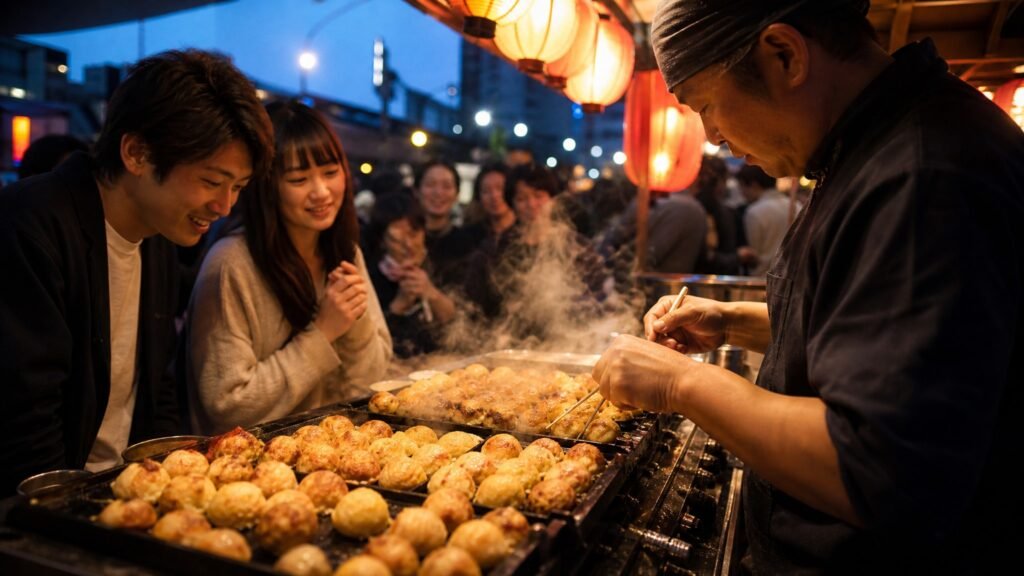
Takoyaki was popularised in Osaka in the 1930s by street vendor Tomekichi Endo, and today the city has more dedicated takoyaki shops per capita than anywhere else in Japan, a point of fierce local pride that sets the tone for every guided tasting. Knowing which shop honours that legacy, and why, transforms a snack into a story.
Small Group Osaka Food Tours vs. Large Commercial Operators
A small group osaka food tour keeps the group to eight people or fewer. That matters because:
- You can duck into a tiny market stall without blocking foot traffic.
- The guide can answer questions, not just herd passengers.
- Vendors engage with you directly, not with a coach queue.
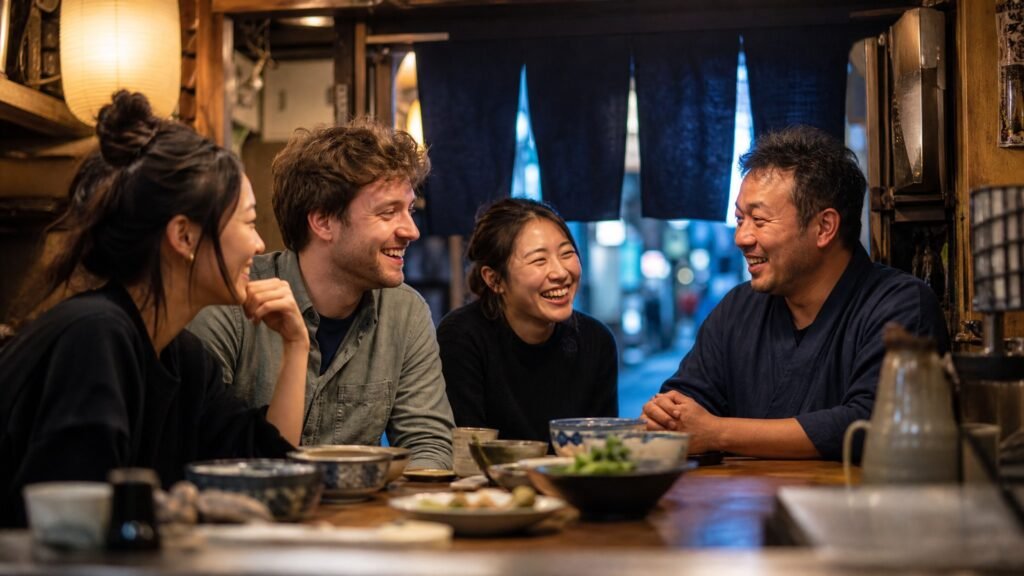
- You eat with Osaka locals, not alongside them.
Large commercial operators prioritise throughput. They book the restaurants with reservation capacity for 30, which means restaurants built for 30 tour groups, not the seven-seat counter where the chef talks you through every dish. The osaka culinary tour experience at that scale becomes a performance, not an immersion.
Dotonbori and Beyond: A Taste of What Your Tour Covers
Every great osaka street food walking tour anchors on Dotonbori, then goes further. That’s the structure we follow, and it works.
Dotonbori’s Iconic Bites: Takoyaki, Kushikatsu, and Street Snacks
Dotonbori is the visual heartbeat of Osaka, the giant crab signs, the Glico running man, the canal lit up at dusk. It’s also genuinely excellent for eating, if you know where to look.
On our osaka dotonbori food guide stops, you’ll try:
- Takoyaki: octopus balls, crispy outside and molten inside, finished with bonito flakes that dance in the heat.
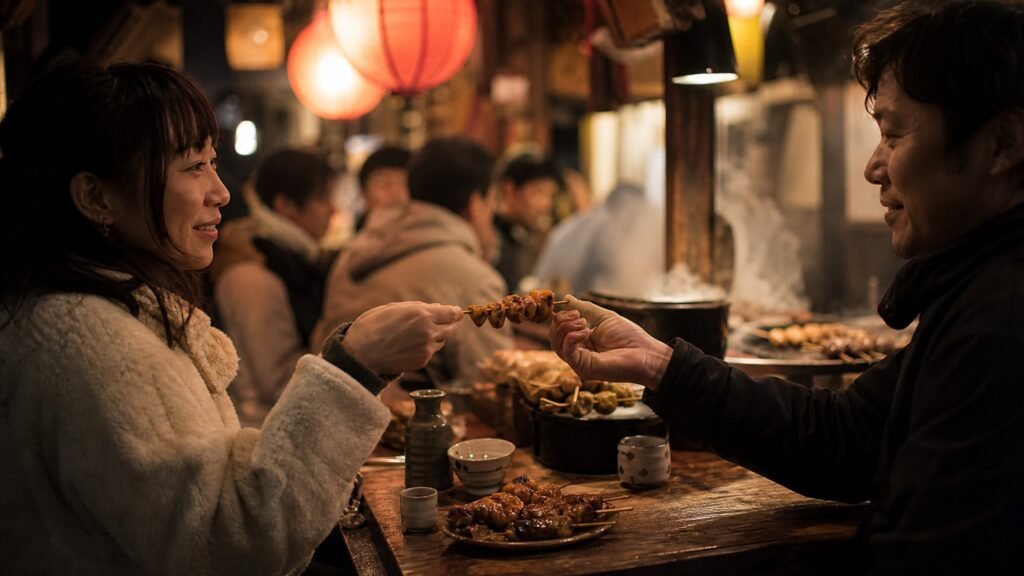
- Kushikatsu: Osaka’s beloved deep-fried skewers of meat, seafood, and vegetables, served with a communal dipping sauce. The no-double-dipping rule is one of the city’s most-enforced food etiquette points, and your guide will walk you through it before you reach the counter.
- Street snacks: from sweet potato cakes to grilled corn brushed with miso, Dotonbori’s side lanes reward the curious.
One etiquette note for first-timers: eating while walking is common in Dotonbori, it’s one of the few places in Japan where it’s socially accepted. Your guide will clarify exactly when and where it’s fine, so you never feel awkward.
Beyond the Neon: Hidden Neighbourhood Eats Your Guide Will Unlock
The real Osaka food culture experience begins when you leave the neon behind.
Shinsekai is a retro working-class district that still feels like Osaka circa 1960. Kushikatsu is the neighbourhood’s religion here, served at standing bars for a few hundred yen a skewer.
Kuromon Ichiba, known as “Osaka’s Kitchen,” is a 170-stall covered market that has supplied professional chefs and home cooks since the 1920s, a dramatically different experience from the tourist-facing stalls in Dotonbori, and one that a local guide navigates effortlessly. Here you’ll taste fresh uni, grilled wagyu on sticks, and seasonal produce that changes with the months.
Namba’s backstreets hold izakaya laneway bars and ramen counters that locals treat as neighbourhood institutions. For context on how to behave and order when you slip into one of these, our izakaya etiquette for first-time visitors page is worth a read before you go.
For the full breakdown of every market, district, and snack covered on foot, see our complete Osaka street food tour guide.
Our Osaka Food Culture Experience: What to Expect on the Day
Here’s the practical shape of the tour, so you can plan your day around it.
We typically meet at a central point near Namba station at early evening, around 5:30 or 6:00 PM, when the city is shifting from work mode to eat mode and the streets start filling with exactly the right energy. Evening tours run approximately three to three-and-a-half hours.
Over that time, you’ll make six to eight tasting stops, covering a mix of market bites, sit-down counter meals, and street snacks. That’s enough food to constitute a full dinner, and then some. Kuidaore in practice.
Our guides brief you before each stop: who runs the place, what you’re eating, how to eat it correctly, and what the locals think of it. No rushing. No megaphones.
Dietary needs: we accommodate vegetarian and vegan diets, gluten-free requirements, and shellfish allergies with advance notice. Japan’s food culture leans heavily on dashi (often fish-based) and soy, so transparency upfront lets us route around the right stops and find genuine alternatives, not afterthoughts. Tell us when you book and we’ll tailor accordingly.
This authentic osaka food experience works equally well for first-time visitors and repeat Japan travellers. If you’ve been to Osaka before, the neighbourhood stops and hidden vendors will still surprise you.
Osaka Ramen, Okonomiyaki, and the Dishes You Can’t Miss
Think of this as the essential dish list, the things you will regret skipping.
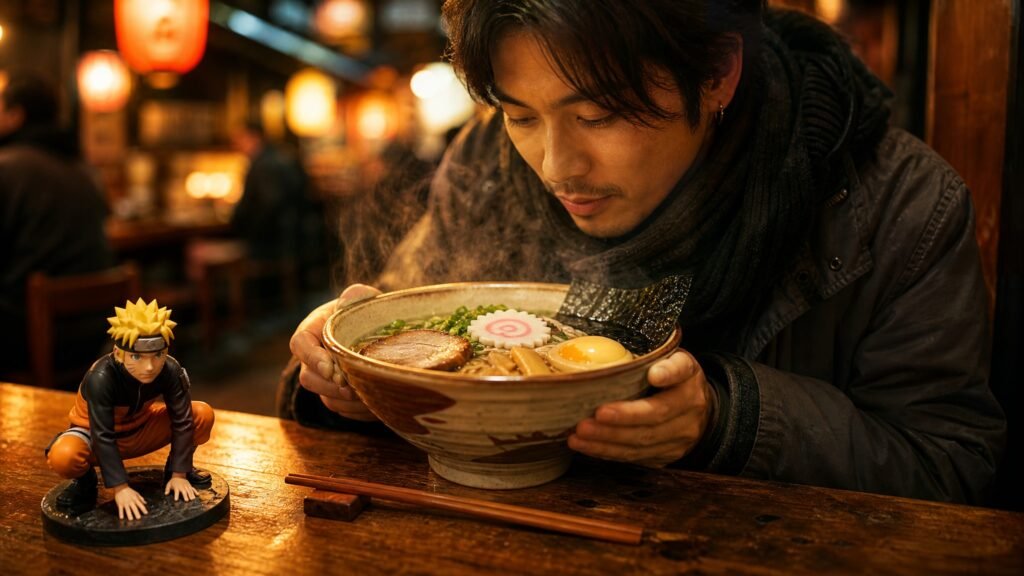
Ramen: Osaka’s style tends toward lighter, cleaner broths than Tokyo’s, a soy-forward shoyu or a rich but not heavy shio. Our osaka ramen tour local guide approach means we skip the chain shops and take you to counters where the broth has been on the stove since morning. For a primer on eating ramen the right way, the slurping, the timing, the toppings, read how to eat ramen in Japan like a local before the tour.
Okonomiyaki: Osaka’s version is the definitive one, ingredients mixed into the batter together and cooked on the griddle as a single unit. It’s savoury, satisfying, and nothing like the Hiroshima version. Topped with Japanese mayo, okonomiyaki sauce, and more of those dancing bonito flakes.
Takoyaki: yes, again, because eating it from a market stall and eating it at a dedicated shop with 40 years of lineage are two different experiences.
Kushikatsu: the deep-fried skewer culture in Osaka is its own universe. Beef, shrimp, lotus root, cheese, quail egg, the variety is extraordinary, and the standing-bar format is pure Osaka.
Horumon: grilled offal, beef and pork intestines, over charcoal at a backstreet yakiniku spot. It sounds confronting; it tastes extraordinary. A guide makes the difference between being excited and being overwhelmed.
How to Book Your Small-Group Osaka Food Tour With Us
Groups are capped at eight people. That cap is non-negotiable because it’s the number at which the experience stays genuinely intimate, small enough to duck into tiny shops, large enough to feel like a group adventure.
Pricing is set per person and covers all tastings at the stops on the route. We’ll confirm the current rate when you enquire, as seasonal menu additions occasionally affect the stop list.
Customisation: beyond dietary adjustments, we offer focused variations, a deeper ramen-and-noodle route, a market-only morning format, a sake and food pairing evening. Tell us what excites you and we’ll tell you what’s possible.
Booking lead time: we recommend reserving at least a week in advance for standard dates, and two to three weeks out for peak travel periods (late March to early May, October, and the New Year window). Same-week bookings are sometimes available, just enquire directly.
The booking process is straightforward: choose your preferred date, share any dietary requirements or interests, and we confirm your spot within 24 hours. Small groups fill fast, so if you have a fixed travel window, earlier is always better.
Ready to eat your way through Japan’s greatest food city with guides who genuinely love it? Enquire now or book your small-group Osaka food tour, and we’ll make sure your time in Osaka tastes exactly as good as it should.
Planning your wider itinerary? Osaka makes an excellent base: a day trip to Nara from Osaka takes under an hour by train, and a day trip to Hiroshima from Osaka is a profoundly worthwhile full-day excursion on the Shinkansen.