Search “best Tokyo food tour” and you’ll get the same result every time: a list of ten restaurants with no connection to each other, no sense of timing, and no idea how far apart they actually are. That’s fine if you’re building your own scattered map of maybes. It’s not so fine if you only have one day in Tokyo and want to eat well without wasting half of it on trains.
Why Plan a Structured Tokyo Food Tour Itinerary
A good day of eating in Tokyo isn’t a checklist. It’s a route. The neighborhoods you choose, and the order you visit them in, decide how much walking you do, how hungry you are at each stop, and whether you actually enjoy yourself by hour six.
Our local guides at Washoku Club City have spent over 12 years building relationships with family-run shops in Tsukiji, Yanaka, and Shibuya’s back alleys. The stops on this itinerary are places we personally vouch for, not just ones that rank high online. What follows is a realistic, hour-by-hour Tokyo food tour itinerary. It moves from old-town market stalls in the morning to modern snack streets in the afternoon, and ends at an izakaya table after dark.
Who This Full-Day Itinerary Works Best For
This plan suits first-time visitors who want structure without a rigid group tour feel. It also works well for families, couples, or small groups who’d rather have a local guide handle logistics, translation, and ordering than piece together a route from ten different blog posts.
If you’re mainly interested in ramen specifically, our dedicated Tokyo ramen tour guide covers that in more depth. This itinerary is built for people who want variety across a full day.
Morning: Tsukiji Outer Market and Traditional Breakfast Flavors
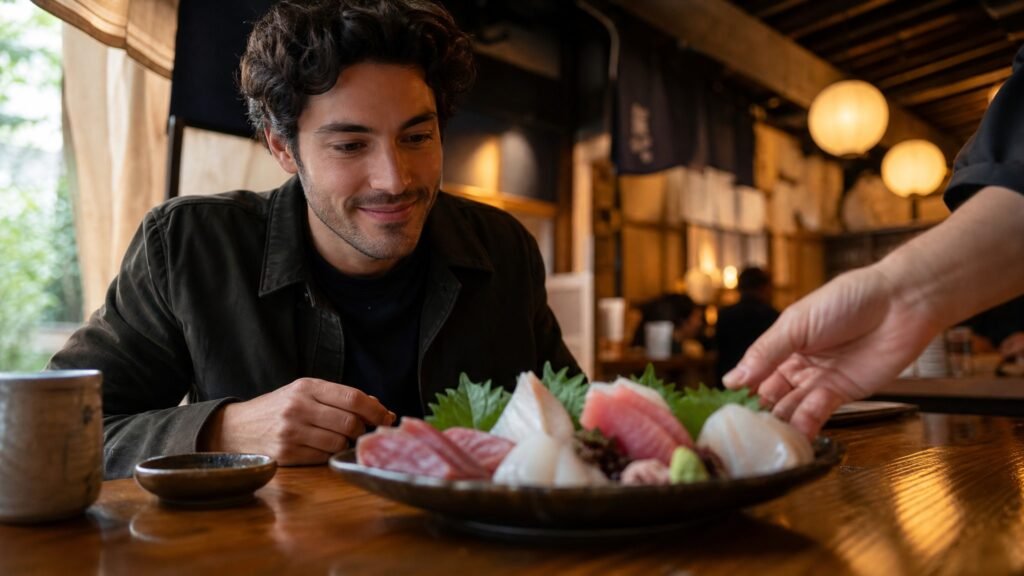
Start between 7:30 and 9am. Tsukiji Outer Market wakes up early, and the stalls selling grilled fish, tamagoyaki, and fresh seafood are busiest right when they open. Arriving early means shorter lines and fresher batches of whatever’s being cooked to order.
What to Order First
Skip the urge to fill up on one big item. Order small and often instead. A skewer of grilled scallop, a slice of tamagoyaki, a cup of miso soup from a stall that specializes in it. These bites add up fast, and they leave room for what’s still ahead.
Getting There Before the Crowds
Tsukiji’s stalls don’t always have English menus or staff who speak much English, and pointing at pictures only gets you so far when you have questions about ingredients. This is where a guide earns their keep. Knowing which stall does the best uni that morning, and being able to ask about allergens on the spot, turns a confusing stroll into an easy Tokyo street food tour anyone can follow. For readers who want to spend more time in the market itself, we’ve put together a deeper dive into Tsukiji and Toyosu market touring.
Midday: Best Neighborhoods for a Tokyo Food Tour Between Bites
By late morning, you’ve had enough small bites to feel satisfied but not stuffed. This is the point to walk, not eat, for a while. Among the best neighborhoods for a Tokyo food tour to pair with midday sightseeing, Yanaka and Asakusa stand out. Both let you slow down between tastings.
Yanaka or Asakusa for an Old-Town Detour
Yanaka’s narrow lanes, old wooden shopfronts, and cemetery walk offer a quieter contrast to Tsukiji’s morning rush. Asakusa, with Senso-ji temple and its approach street, gives you more energy and more people, along with small snack stops along the way. Either works. The point is to let an hour or so of walking and browsing settle your stomach before the next round of food.
Working in a Rest and Hydration Break
First-time visitors often assume Tokyo food touring means one long meal crawl. The most satisfying days actually alternate small tastings with walking and market browsing, so nobody hits a wall by 2pm. Plan a real sit-down break here, even just 15 minutes with a cold drink. It matters more than people expect on a hot Tokyo afternoon.
Afternoon: Modern Street Food and Pop Culture Snacking
Early afternoon, roughly 1:30 to 3:30pm, is the right window to shift gears entirely. Trade the old-town pace for something louder and more colorful.
Harajuku or Shibuya Snack Crawl
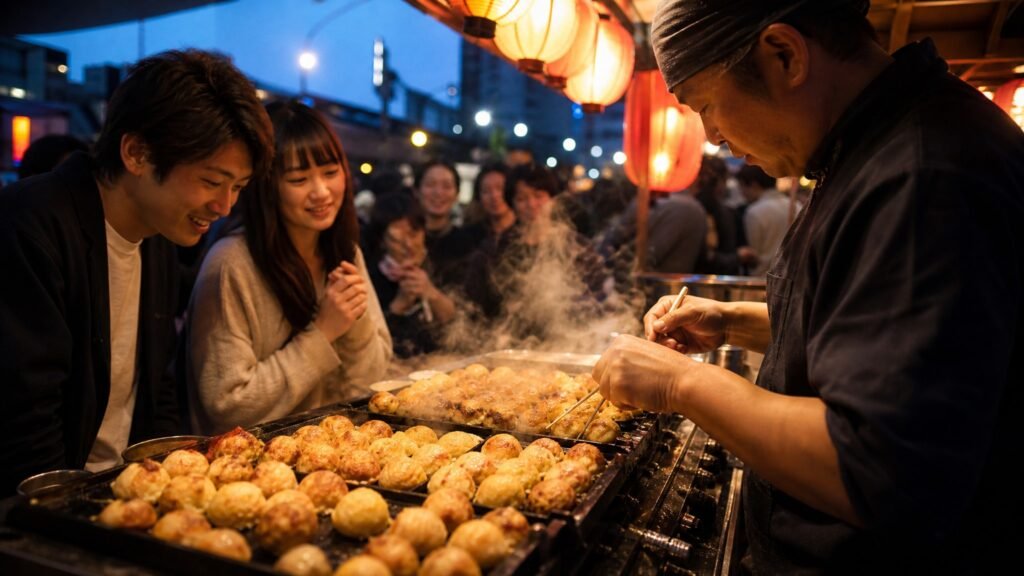
Harajuku’s Takeshita Street and Shibuya’s side streets are where Tokyo’s street food gets playful. Crepes, colorful soft-serve, and creative skewers sit next to fashion boutiques and photo-ready storefronts. If your interest leans more toward the fashion and youth culture side of things, Harajuku’s street style and snack scene is worth exploring on its own.
Balancing Traditional and Modern Bites
The contrast is part of the point. Tamagoyaki at a 90-year-old market stall in the morning, then a rainbow soft-serve in Harajuku a few hours later. Two very different sides of how Tokyo eats. Keep portions small here too. You’ve got one more big stop coming.
Evening: Izakaya Dinner and Guided Tokyo Food Tour Etiquette
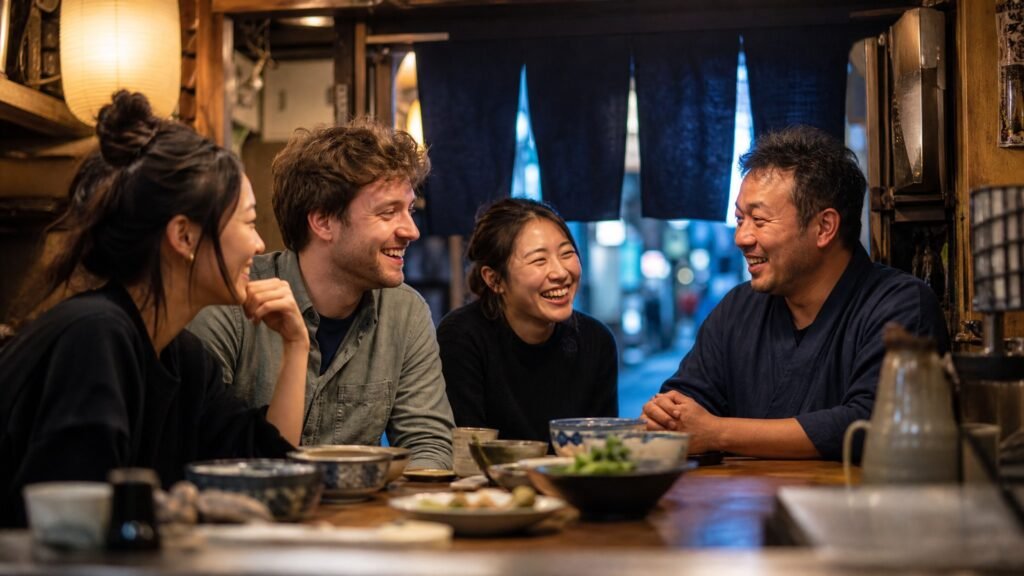
By early evening, around 6 to 8pm, it’s time for the meal that anchors the whole day: dinner at an izakaya. This is where a guided Tokyo food tour really pays off, because izakayas run on unwritten rules that aren’t obvious to first-time visitors.
What to Expect at an Izakaya Table
Expect a seating charge called otoshi, a small starter dish you didn’t order but will be charged for. Expect shared plates ordered gradually through the meal rather than all at once. Expect noise, energy, and a menu that may only be in Japanese. None of that should feel intimidating. It’s just a different rhythm than a Western sit-down restaurant.
Tips for Ordering With a Local Guide
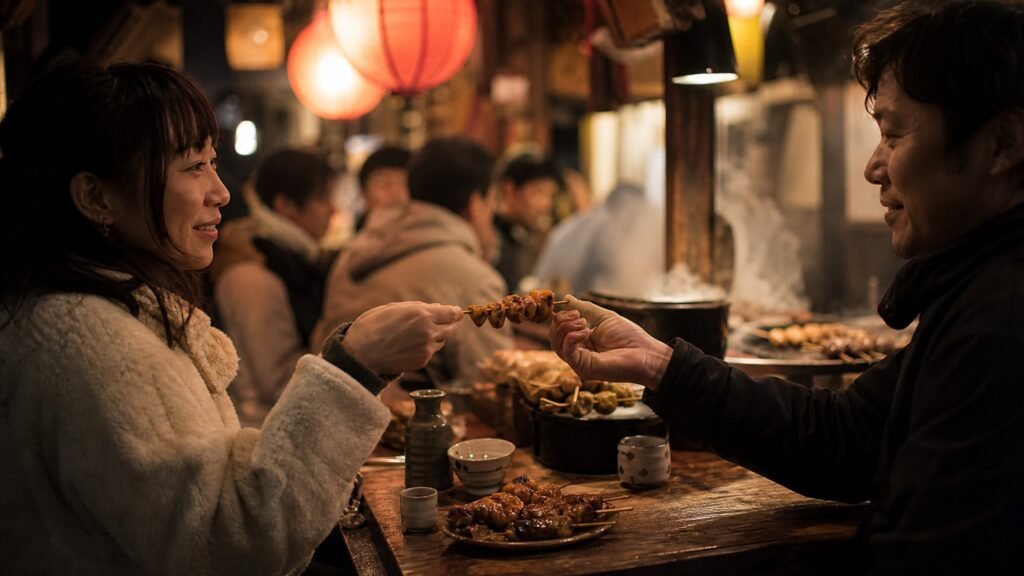
A guide orders in waves, paces the food so nothing arrives cold, and translates dishes on request instead of guessing. That alone removes most of the anxiety beginners feel about izakaya dining. For more detail on the norms, izakaya etiquette for first-timers is a good companion read. And if yakitori or ramen shows up on the table, how to eat ramen the right way covers the basics of slurping etiquette too.
A typical day might start with tamagoyaki and grilled fish at a Tsukiji Outer Market stall before 9am, move to a hidden soba counter in Yanaka by early afternoon, and end with yakitori and highballs in a Shibuya izakaya alley after dark. That’s roughly what this whole itinerary adds up to.
Customizing Your Full Day Tokyo Food Experience
No two groups eat exactly the same way. A full day Tokyo food experience should flex around your actual preferences, not force you into someone else’s ideal menu.
Dietary Preferences and Allergies
We’ve adjusted this same route dozens of times on the fly for guests who are vegetarian, have shellfish allergies, or are traveling with kids. That’s why the pacing notes above include realistic buffer time. Tsukiji’s seafood-heavy stalls swap easily for grilled vegetable and tofu options. Izakaya menus almost always include enough non-seafood dishes to build a full, satisfying dinner. If you’re vegetarian or plant-based, our vegetarian food tour options in Tokyo show how a full day works without any of the seafood-heavy stops.
Building Your Own Tokyo Culinary Walking Tour Route
If you’d rather build your own Tokyo culinary walking tour route than follow this one exactly, the pacing rules still apply. Alternate eating with walking. Space out heavy meals. Leave room for detours. And if you want an evening built around a specific area rather than a food theme, a full day itinerary around Shibuya Crossing pairs well with the afternoon and evening stops above.
For readers who want the cultural backbone behind these dishes, the fundamentals of washoku cuisine explains what ties Tsukiji’s tamagoyaki to an izakaya’s grilled fish, and why both matter on the same day’s plate.
Planning all of this yourself is doable. But a Tokyo food tour for beginners goes smoother with someone who’s walked this exact route hundreds of times, knows which stalls are worth the wait, and can adjust the plan the moment something isn’t working. If that sounds like the day you want, get in touch with Washoku Club City and we’ll build it around your group, your appetite, and your questions along the way.